
Warehouse Racking in UAE: Designed for Durability

Updated: Aug 6

The logistics and industrial sector across the Emirates has grown at a remarkable pace, and with that growth comes a pressing need for smarter storage infrastructure. Warehouse racking in UAE has become the backbone of modern distribution centers, manufacturing units, and retail supply chains. As businesses expand their inventory and floor space demands increase, choosing the right storage system is no longer optional — it is a strategic necessity. Whether a company operates a small storage facility or a sprawling distribution hub, warehouse racking in UAE offers the structural strength and flexibility needed to keep operations running smoothly.
This article explores everything businesses should know about racking systems, from the different types available to the factors that influence a smart purchase decision, along with common questions people search for when researching this topic.
Why Warehouse Racking in UAE Matters for Growing Businesses
The UAE has positioned itself as a global trade and logistics hub, connecting markets across Asia, Africa, and Europe. This strategic location means warehouses in Dubai, Abu Dhabi, Sharjah, and other emirates handle enormous volumes of goods daily. Without a properly engineered storage system, businesses risk wasted floor space, slow order fulfillment, and even workplace safety hazards.
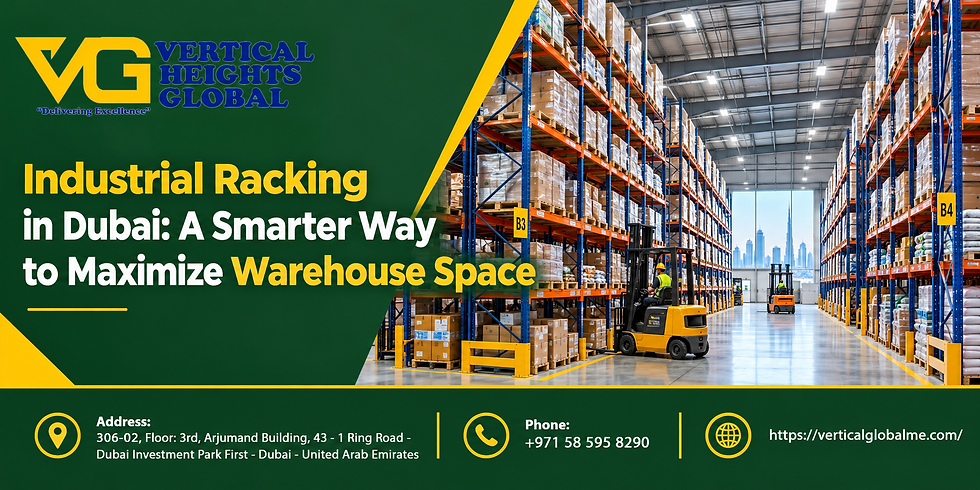
This is where warehouse racking in UAE plays a critical role. A well-designed racking system allows companies to store more products vertically, reducing the footprint needed for horizontal storage. This vertical approach not only saves valuable floor space but also improves accessibility, making it easier for forklifts and staff to retrieve items quickly. In a region where commercial rent and land costs can be high, maximizing every square meter of a warehouse translates directly into cost savings.
Beyond space optimization, durability is a major consideration. The UAE's climate, with its heat and humidity, requires storage equipment built from materials that resist corrosion and structural fatigue over time. This is precisely why the phrase "designed for durability" resonates so strongly with businesses evaluating their storage infrastructure needs.
Understanding Pallet Racking in Dubai
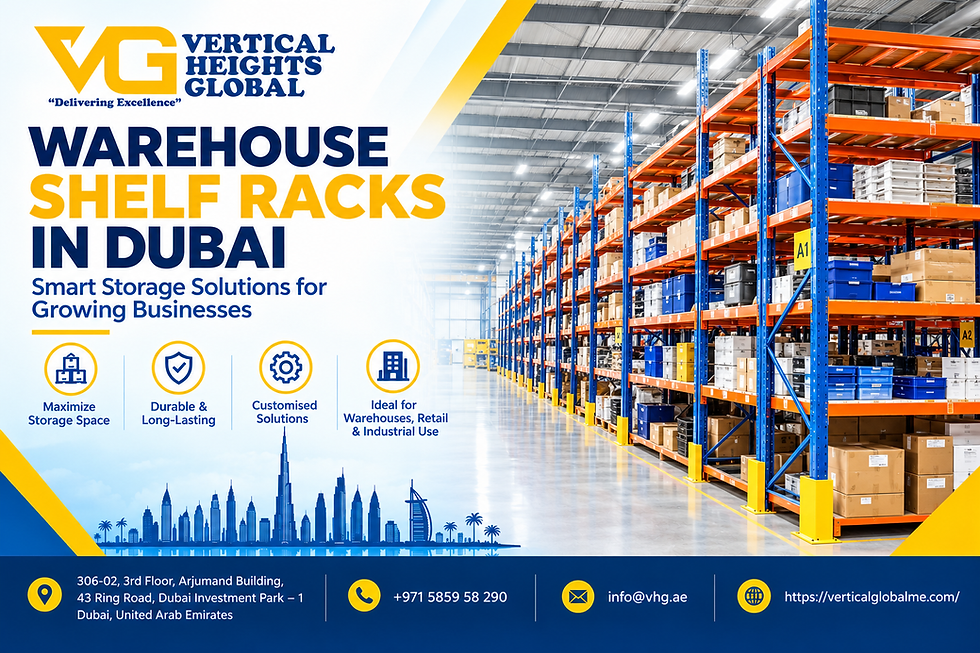
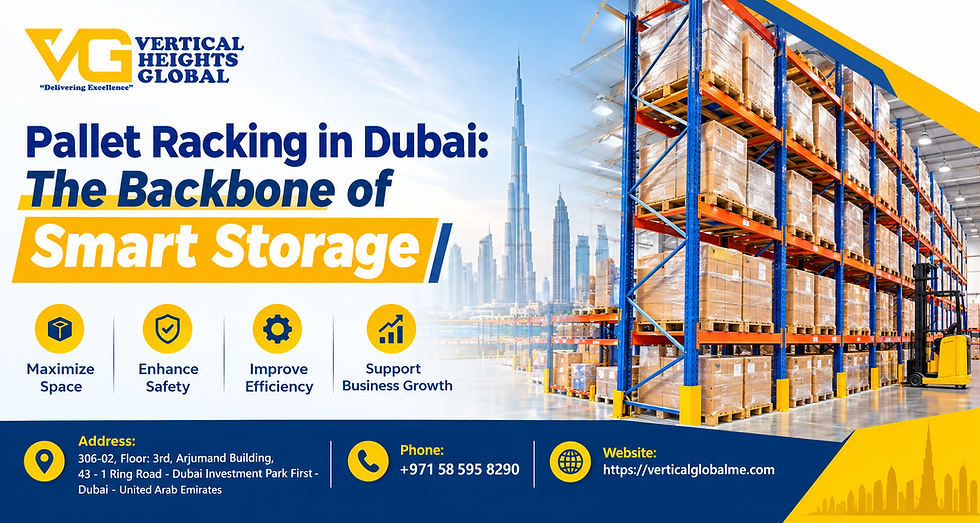
Among the many racking configurations available, pallet racking in Dubai remains one of the most widely adopted systems for bulk storage. This system uses horizontal beams and vertical frames to create multiple levels of storage, allowing pallets loaded with goods to be stacked several meters high. Forklifts can drive directly into the aisles to place or retrieve pallets, making the process fast and efficient.
Pallet racking in Dubai is particularly popular among businesses dealing with high-volume inventory such as food distribution, retail supply chains, and manufacturing components. The flexibility of this system means it can be customized based on load capacity, aisle width, and the specific dimensions of a warehouse. Many facilities also opt for selective pallet racking, which offers direct access to every pallet, or drive-in racking, which maximizes density for uniform products.
Selecting the right configuration of pallet racking in Dubai depends on several operational factors, including how quickly inventory turns over, the weight of goods being stored, and the available ceiling height. A poorly planned racking layout can slow down operations, while a well-planned one can significantly boost throughput and order accuracy.
Types of Storage Racking Systems Used in the UAE
Storage racking is not a one-size-fits-all solution. Different industries and warehouse layouts call for different configurations, and understanding these options helps businesses make informed decisions.
Selective Racking: This is the most common type of storage racking, offering easy access to each pallet position. It works well for warehouses with a wide variety of products and frequent picking activity.
Drive-In and Drive-Through Racking: These systems are ideal for high-density storage racking of similar products, such as bulk food items or seasonal goods, where first-in-first-out or last-in-first-out inventory management is acceptable.
Cantilever Racking: Designed for long or irregularly shaped items like pipes, timber, or steel bars, cantilever storage racking removes vertical obstructions, allowing for easy loading and unloading.
Mezzanine Racking: For businesses looking to add an entire additional storage level without expanding their building footprint, mezzanine storage racking creates a secondary floor above existing racks.
Push-Back Racking: This system uses a cart and rail mechanism to store multiple pallets deep, combining density with reasonably good selectivity.
Each of these storage racking types brings distinct advantages, and the right choice often comes down to a careful assessment of inventory type, turnover rate, and available warehouse space.
Key Benefits of Investing in Quality Racking Systems
Businesses that invest in properly engineered warehouse racking in UAE typically experience several measurable benefits:
Space Optimization – Vertical storage reduces the need for larger warehouse footprints, which is especially valuable given commercial real estate costs in cities like Dubai and Abu Dhabi.
Improved Safety – Structurally sound racking, installed according to engineering standards, reduces the risk of collapses, falling stock, and workplace accidents.
Better Inventory Management – Organized storage racking makes it easier to categorize, label, and track inventory, reducing picking errors and improving order accuracy.
Faster Operations – Well-planned aisle widths and accessible shelving speed up loading, unloading, and order fulfillment processes.
Long-Term Cost Savings – Durable racking systems reduce the frequency of repairs or replacements, offering a better return on investment over time.
Scalability – Modular racking designs allow businesses to expand their storage capacity as their operations grow, without needing a complete overhaul.
Factors to Consider When Choosing Warehouse Racking in UAE
Selecting the right racking system requires more than just picking the cheapest option. Businesses should evaluate several factors before making a purchase decision.
Load Capacity: Understanding the weight of goods being stored is essential. Heavy machinery parts require a different racking strength compared to lightweight retail products.
Warehouse Layout and Ceiling Height: The available vertical and horizontal space determines what type of racking configuration will work best. A facility with high ceilings may benefit from taller racking to maximize cubic storage capacity.
Material Quality: Given the environmental conditions in the region, racking made from high-grade steel with proper anti-corrosion coating tends to last significantly longer.
Compliance with Safety Standards: Racking systems should meet local and international safety codes, including proper anchoring, load labeling, and regular inspection schedules.
Future Scalability: Businesses growing rapidly should consider modular racking systems that can be expanded or reconfigured as inventory needs change.
Installation and Maintenance Support: Working with experienced suppliers ensures proper installation, which is critical for both safety and system longevity.
Safety Standards for Racking Systems in the UAE
Workplace safety is a top priority for warehouses across the Emirates, and racking systems must comply with recognized structural and safety guidelines. Regular inspections should check for bent frames, damaged beams, or overloaded shelves. Warehouses are also encouraged to install proper signage indicating maximum load capacities and to train staff on correct loading and retrieval procedures.
Proper floor anchoring is another essential safety measure, particularly in regions where seismic activity, though rare, must still be accounted for in structural planning. Combined with routine maintenance checks, these safety practices help extend the lifespan of racking systems while protecting both employees and inventory.
Emerging Trends in Warehouse Racking in UAE
The storage racking industry in the UAE continues to evolve alongside the broader logistics sector. Automation is playing an increasingly important role, with many facilities integrating automated storage and retrieval systems that work in tandem with traditional racking structures. This combination allows for faster picking speeds and reduced reliance on manual labor.
Sustainability is another growing trend, with businesses opting for racking systems made from recyclable materials and finishes designed to reduce environmental impact. Additionally, as e-commerce continues to expand across the region, demand for high-density storage racking solutions has increased, since online retailers require efficient systems that can handle diverse product sizes and rapid order turnover.
Modular and reconfigurable racking designs are also gaining popularity, allowing businesses to adapt their storage layouts without significant downtime or additional construction costs. This flexibility is particularly valuable for companies experiencing seasonal fluctuations in inventory volume.
Cost Considerations for Businesses
Budget planning is often the deciding factor when businesses evaluate storage solutions. While it can be tempting to choose the lowest-priced option, this approach can lead to higher costs over time due to frequent repairs, reduced load capacity, or premature replacement. A smarter approach involves comparing total cost of ownership rather than just the upfront purchase price.
Factors that influence overall cost include the grade of steel used, the complexity of the installation, the number of levels required, and any customization needed for irregular items. Businesses should also account for ongoing maintenance, periodic safety inspections, and potential future expansion. Working with suppliers who provide clear specifications and transparent pricing helps avoid unexpected expenses down the line.
For companies operating across multiple locations in the Emirates, standardizing storage specifications can also simplify procurement, maintenance, and staff training, ultimately reducing operational complexity and long-term costs.
Industries That Rely on Robust Storage Systems
A wide range of sectors depend on efficient storage infrastructure to keep their supply chains running smoothly. Retail and e-commerce companies require fast-moving inventory systems that support quick picking and packing. Food and beverage distributors need temperature-controlled zones paired with sturdy shelving to handle perishable goods safely. Manufacturing plants often store raw materials and finished components on heavy-duty frames designed to bear substantial weight, while pharmaceutical companies prioritize organized, easily traceable storage to meet strict regulatory requirements. Each of these industries benefits from tailored solutions that match their unique operational demands.
Choosing a Reliable Racking Partner
When it comes to sourcing and installing dependable storage solutions, working with an experienced provider makes a significant difference in long-term performance. Vertical Heights Global in UAE, Dubai, is known for offering engineered racking solutions built to withstand the demands of high-volume warehouse operations. Partnering with a knowledgeable provider ensures that businesses receive systems tailored to their specific load requirements, space constraints, and operational goals, backed by proper installation and after-sales support.
Conclusion
As trade and commerce continue to expand across the region, the importance of a durable, well-planned storage system cannot be overstated. Warehouse racking in UAE offers businesses the structural strength, flexibility, and space efficiency needed to keep pace with growing operational demands. From pallet racking in Dubai to specialized storage racking configurations, the right system can transform how a warehouse functions, improving safety, accuracy, and overall productivity.
Businesses evaluating their storage needs should carefully consider load requirements, available space, and long-term scalability before making a decision. With the right planning and a reliable partner such as Vertical Heights Global in UAE, Dubai, companies can build storage infrastructure that stands the test of time, supporting their growth for years to come.
Frequently Asked Questions
1. What is warehouse racking used for?
Warehouse racking is used to store goods and materials in an organized, vertical manner, allowing businesses to maximize available floor space while keeping inventory accessible and easy to manage.
2. What is the difference between pallet racking and shelving?
Pallet racking is designed to hold palletized loads, often accessed with forklifts, while shelving is typically used for smaller, hand-picked items stored in boxes or bins without the need for machinery.
3. How much weight can a pallet racking system hold?
Load capacity varies depending on the design, material, and configuration, ranging from a few hundred kilograms per level in lighter systems to several tonnes in heavy-duty industrial racking.
4. How do I choose the right racking system for my warehouse?
Choosing the right system depends on factors such as inventory type, turnover rate, available space, ceiling height, and budget, along with future scalability needs.
5. What materials are warehouse racking systems made from?
Most racking systems are constructed from cold-rolled or hot-rolled steel, often treated with powder coating or galvanization to resist corrosion and improve durability.
6. How often should warehouse racking be inspected?
Racking should be inspected regularly, typically every few months, along with an annual professional structural assessment to identify wear, damage, or safety risks.
7. Can warehouse racking be customized for specific storage needs?
Yes, racking systems can be customized in terms of height, depth, load capacity, and configuration to suit specific products, aisle widths, and warehouse layouts.
8. Is drive-in racking better than selective racking?
Drive-in racking offers higher storage density and is ideal for uniform, bulk products, while selective racking provides easier access to individual pallets, making it better suited for varied inventory with frequent picking activity.
Comments