
Pallet Racking in Dubai : The Backbone of Smart Storage

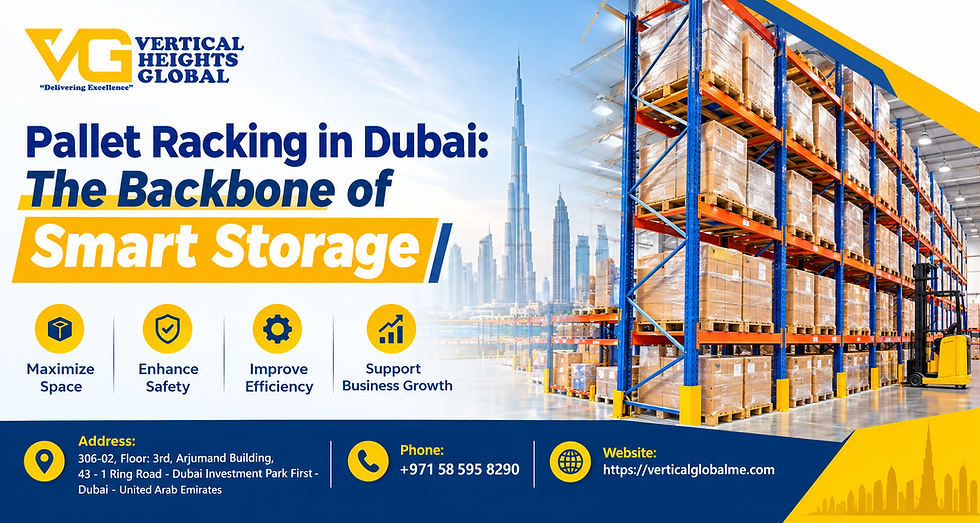
Every growing business in the UAE eventually faces the same challenge: how to store more goods without running out of floor space. This is exactly where pallet racking in Dubai becomes essential. As the emirate continues to expand its role as a logistics and trade hub for the Middle East, warehouses, distribution centers, and manufacturing units are under constant pressure to store larger volumes of inventory in smaller footprints. Pallet racking in Dubai has therefore become one of the most searched and most practical storage solutions for businesses of every size, from small retailers to large-scale industrial operations.
This article explains everything you need to know about pallet racking in Dubai, the role of a pallet racking system in Dubai, how warehouse shelf racks fit into the bigger picture, and why warehouse shelving in UAE facilities is evolving to meet modern demands. We will also look at what people actually search for when researching this topic, so you can make an informed decision before investing in storage infrastructure.
Why Pallet Racking in Dubai Has Become a Business Priority
Dubai's position as a global trade and re-export center means that thousands of tonnes of goods move through its warehouses every single day. From free zones like Jebel Ali to industrial areas such as Al Quoz and Dubai Investment Park, businesses are storing everything from electronics to food products, textiles, and construction materials. Without an organized storage system, warehouse operations quickly become chaotic, unsafe, and inefficient.
Pallet racking in Dubai solves this problem by allowing goods to be stored vertically rather than horizontally. Instead of stacking pallets directly on top of one another, which risks damaging products and makes retrieval difficult, a proper racking structure uses upright frames and horizontal beams to create clearly defined storage levels. This structure allows forklifts to access any pallet at any level without disturbing the rest of the inventory.
Businesses that switch from unorganized floor storage to a proper pallet racking system in Dubai typically report significant improvements in space utilization, inventory accuracy, and worker safety. In a city where commercial rent is a major operating cost, maximizing vertical space through pallet racking in Dubai directly translates into financial savings.
Understanding the Different Types of Pallet Racking in Dubai
Not every warehouse has the same requirements, which is why pallet racking in Dubai comes in several configurations. Selective pallet racking is by far the most common choice because it gives direct access to every single pallet position, making it ideal for warehouses that handle a wide variety of stock keeping units. This type suits distribution centers, retail backrooms, and general trading warehouses that need frequent access to different products.
For businesses that store large quantities of a limited number of products, high-density options such as drive-in racking or double-deep racking offer better space efficiency. These systems reduce the number of aisles needed, which increases the total number of pallet positions in the same floor area. Cold storage facilities, food distributors, and manufacturers with bulk raw materials often prefer these denser forms of pallet racking in Dubai because they prioritize storage volume over individual pallet accessibility.
There are also specialized configurations like push-back racking and pallet flow racking, which use gravity or rail systems to move pallets automatically as stock is picked. While these are more complex and costly, they are increasingly common in high-turnover warehouses across the UAE.
Warehouse Shelf Racks: A Complementary Storage Solution
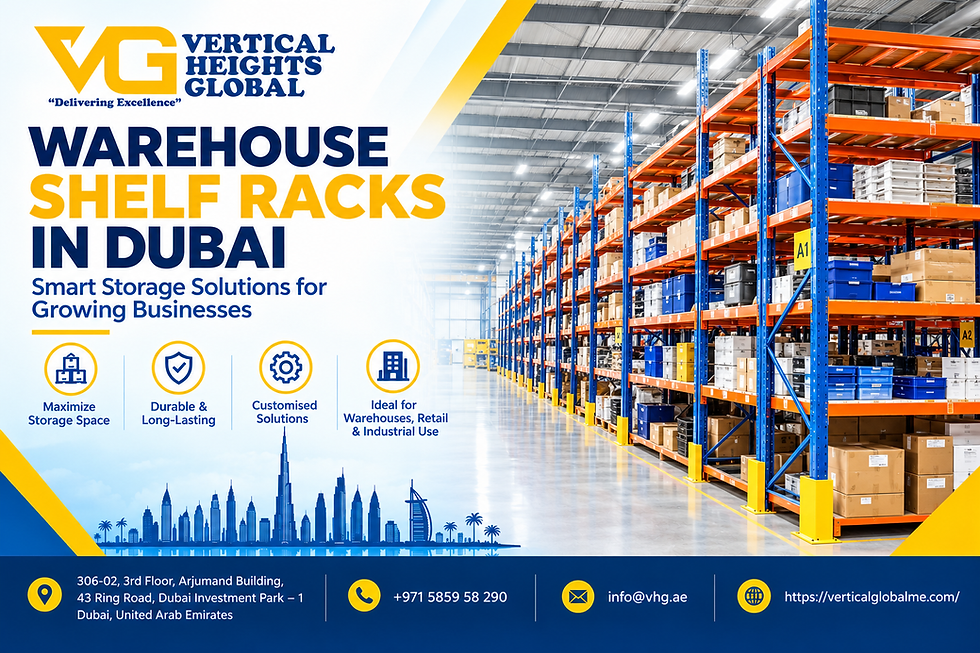
While pallet racking is designed for palletized, forklift-handled goods, many businesses also need smaller-scale storage for items that are picked by hand. This is where warehouse shelf racks come in. Warehouse shelf racks are typically used for smaller, lighter items such as spare parts, packaged goods, documents, or e-commerce inventory that does not require pallet-level handling.
In most modern facilities, warehouse shelf racks work alongside a pallet racking system in Dubai rather than replacing it. A common layout involves pallet racking for bulk storage near the loading area, with warehouse shelf racks positioned closer to picking stations for faster order fulfillment. This hybrid approach is particularly popular among e-commerce fulfillment centers and spare parts distributors operating across Dubai and the wider UAE.
Choosing the right combination of pallet racking and warehouse shelf racks depends on the nature of the goods being stored, the picking frequency, and the available ceiling height. A proper storage consultant will usually assess these factors before recommending a final layout.
Warehouse Shelving in UAE: Meeting Local Industry Demands
The demand for warehouse shelving in UAE facilities has grown significantly alongside the country's logistics and e-commerce boom. Unlike simple pallet storage, warehouse shelving in UAE often needs to account for the region's climate, humidity near coastal areas, and strict fire and safety regulations enforced by local municipalities and Civil Defence authorities.
Steel shelving with proper powder coating is widely preferred because it resists corrosion in humid conditions, a factor that matters greatly in a country surrounded by desert heat and coastal moisture. Businesses investing in warehouse shelving in UAE should also consider load capacity certifications, since improperly rated shelving is one of the leading causes of warehouse accidents.
Many companies looking for warehouse shelving in UAE also want modular systems that can be reconfigured as their inventory changes. This flexibility is especially valuable for seasonal businesses, such as those dealing in retail goods or event supplies, where storage needs can fluctuate sharply throughout the year.
What People Actually Search For Related to Pallet Racking in Dubai
Understanding search intent helps clarify what buyers in this market genuinely need to know before making a purchase. Based on common search patterns around pallet racking in Dubai, most queries fall into a few clear categories.
First, many searches focus on cost, such as pricing per bay, cost comparisons between racking types, and budget planning for a full warehouse fit-out. Second, a large portion of searches relate to safety and compliance, including load capacity limits, inspection requirements, and how to prevent rack collapse. Third, people frequently search for installation-related information, wanting to understand how long installation takes and whether it disrupts ongoing warehouse operations.
Another significant search category involves comparing racking types, particularly selective versus drive-in racking, or pallet racking versus warehouse shelf racks, to determine which fits a specific business model. Finally, many searches are location-specific, with businesses wanting suppliers who understand UAE regulations, offer local after-sales support, and can conduct on-site surveys before quoting a project. This location-based intent is precisely why local expertise matters so much when selecting a pallet racking system in Dubai.
Key Factors to Consider Before Installing Pallet Racking in Dubai
Before committing to any pallet racking in Dubai project, businesses should evaluate a few critical factors. Warehouse height is one of the first considerations, since taller ceilings allow for more storage levels and a better return on investment. Floor load capacity is equally important, as heavy-duty racking systems place significant point loads on the warehouse floor.
Forklift type and aisle width also affect the final layout. Narrower aisles increase storage density but require specialized forklifts capable of operating in tight spaces. Additionally, businesses must account for future growth. A well-designed pallet racking system in Dubai should be expandable, allowing additional bays or levels to be added without a complete redesign.
Safety compliance cannot be overlooked either. Rack protection barriers, column guards, clearly displayed load capacity signage, and scheduled structural inspections are not optional extras but essential components of a responsible warehouse operation.
Choosing a Reliable Partner for Pallet Racking in Dubai
Given how much is riding on a correctly designed storage system, choosing the right partner matters as much as choosing the right rack. A dependable provider should offer a proper site survey, a detailed layout plan, certified materials, and after-sales support for maintenance and future expansion.
Vertical Heights Global in UAE, Dubai is one of the names businesses across the region turn to when they need guidance on selecting the right combination of pallet racking, warehouse shelf racks, and warehouse shelving in UAE facilities. Working with an experienced local team ensures that the final installation meets both operational needs and UAE safety regulations, rather than relying on generic international designs that may not suit local conditions.
Conclusion
As Dubai's logistics, retail, and manufacturing sectors continue to expand, the demand for efficient, safe, and scalable storage solutions will only grow. Pallet racking in Dubai is no longer just an operational upgrade; it has become a fundamental part of running a competitive warehouse in the UAE. Whether a business needs a full pallet racking system in Dubai, complementary warehouse shelf racks for smaller items, or a complete overhaul of its warehouse shelving in UAE facilities, the right storage strategy can significantly improve space utilization, safety, and long-term operational costs.
For businesses ready to plan or upgrade their storage infrastructure, working with an experienced local partner such as Vertical Heights Global in UAE, Dubai can help ensure the final system is safe, compliant, and built to support future growth.
Frequently Asked Questions
1. What is pallet racking and why is it used in Dubai warehouses?
Pallet racking is a storage system made of upright frames and horizontal beams that allows palletized goods to be stored vertically. It is widely used in Dubai because it maximizes limited warehouse space while keeping inventory organized and easily accessible for forklifts.
2. How long does a pallet racking system in Dubai typically last?
With proper maintenance and regular inspections, a well-built pallet racking system in Dubai can last between 20 and 30 years. Powder-coated steel is preferred locally because it holds up well against humidity and heat.
3. What is the difference between pallet racking and warehouse shelf racks?
Pallet racking is designed for heavier, palletized loads handled by forklifts, while warehouse shelf racks are meant for smaller, lighter items that are usually picked by hand. Many warehouses use both systems together for maximum efficiency.
4. How much weight can a pallet racking system hold?
Load capacity depends on the beam type, length, and overall configuration. Standard selective racking generally supports a few thousand pounds per level, while heavy-duty industrial racking can hold significantly more. Always check manufacturer load charts before loading any rack.
5. Can pallet racking be expanded later if my business grows?
Yes, most pallet racking systems are modular by design, meaning additional bays, beams, or levels can be added later without dismantling the existing structure, provided the original layout was planned with future growth in mind.
6. Is warehouse shelving in UAE different from standard shelving elsewhere?
Warehouse shelving in UAE often needs to account for local humidity, heat, and strict municipal safety codes. Corrosion-resistant coatings and certified load ratings are especially important for long-term durability in this climate.
7. How often should pallet racking be inspected for safety?
Most safety guidelines recommend monthly visual checks and a more thorough professional inspection at least once or twice a year. Regular inspection helps catch dents, corrosion, or misalignment before they lead to structural failure.
8. How do I choose the right racking supplier in Dubai?
Look for a supplier that offers a free site survey, a detailed CAD layout plan, certified materials meeting recognized load standards, and local after-sales support. Local knowledge of UAE regulations is a major advantage over overseas suppliers.

Comments