
Warehouse Rack and Shelf Systems: A Complete Guide to Improving Storage Capacity and Organization

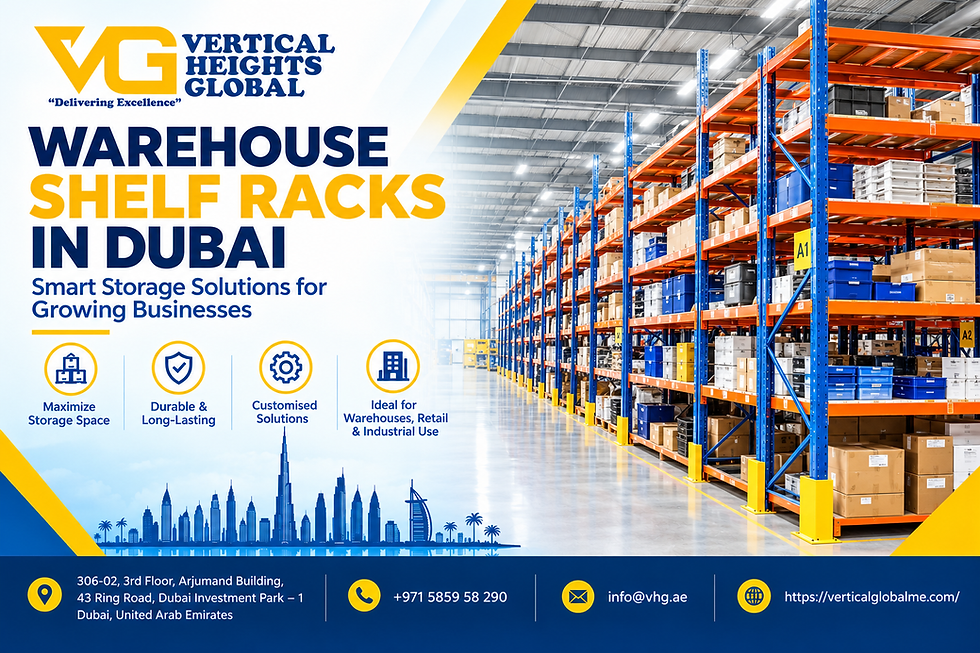
A well-organized warehouse depends on more than the amount of space available. Products must be stored logically, accessed efficiently, and protected from avoidable handling risks. A suitable warehouse rack and shelf arrangement helps businesses create defined storage locations for different types of inventory while making better use of the building's available area.
Some facilities handle large pallets, while others manage cartons, spare parts, tools, and individual products. Many warehouses need to accommodate all these categories within the same building. Combining suitable rack and shelf systems can help businesses create a practical storage plan without treating every product as if it had identical requirements.
Understanding the Difference Between Racks and Shelves
Although the terms are sometimes used interchangeably, racks and shelves can serve different storage purposes.
Shelving commonly accommodates smaller products, cartons, components, and items that employees pick individually. Depending on the design, shelves may have adjustable levels to suit changing product dimensions.
Racking often refers to structural systems designed for larger loads or palletized goods. Pallet racking, for example, supports pallets on designated beams and requires suitable handling equipment and carefully defined load limits.
The right choice depends on product weight, dimensions, storage volume, access frequency, and the method used to move goods. Some operations benefit from shelving alone, while others need a combination of shelving and pallet racking.
Why Warehouse Racks and Shelving Systems Matter
A structured storage arrangement can improve daily warehouse operations in several ways.
Defined storage locations: Products can be assigned to specific positions, making it easier for employees to locate and return inventory.
Better use of available space: Appropriate vertical storage can increase usable capacity without necessarily increasing the building's footprint.
More organized picking: Frequently ordered products can be assigned practical locations based on their movement and handling requirements.
Clearer stock separation: Different product categories, packaging types, and handling needs can be accommodated in designated areas.
More consistent inventory procedures: When physical locations match inventory records, stock checks and replenishment processes can become easier to manage.
These advantages depend on an appropriate layout, accurate stock records, and consistent operating procedures. Installing more storage equipment alone will not resolve inefficient inventory management.
Types of Industrial Warehouse Shelves and Racks
General-purpose industrial shelving
Industrial warehouse shelves can accommodate tools, components, cartons, and smaller inventory items. They are useful when individual products must remain accessible without moving an entire pallet.
Consider the dimensions of the items, the weight placed on each shelf, and the amount of space needed for picking. Adjustable levels may offer flexibility when stock sizes change, provided that adjustments follow the manufacturer's specifications.
Selective pallet racking
Selective pallet racking provides access to individual pallet positions. It may be suitable for businesses managing a wide range of products that need to be retrieved independently.
Its design should account for pallet dimensions, handling equipment, load weights, beam specifications, and aisle clearances. The intended configuration must be verified against the relevant technical ratings.
Heavy-duty warehouse rack systems
Heavy-duty warehouse rack systems are intended for specific higher-load applications. Their suitability depends on the complete structure, including the frames, beams, connections, anchoring, and load distribution.
Businesses should request clear specifications for the proposed configuration. A rack should never be loaded beyond its documented capacity, and damaged components should not be used without appropriate assessment.
Mixed rack and shelf arrangements
A mixed arrangement can provide bulk pallet storage in one zone and accessible shelving in another. For example, a distribution facility may store reserve inventory on pallets while keeping smaller quantities of frequently ordered products on shelves.
This approach can separate replenishment activities from individual order picking. However, the layout must maintain clear routes for workers and equipment and ensure that each system is suitable for its intended load.
How to Design a Practical Warehouse Storage Layout
Start with a product inventory assessment
List the main product categories and record their dimensions, weights, packaging, quantities, and movement frequency. Identify goods that require special handling or particular storage conditions.
This information helps determine which items belong on shelves and which require a rack designed for palletized or heavier loads.
Measure the facility
Record floor dimensions, ceiling height, columns, doors, loading areas, and other physical restrictions. Identify building services and safety equipment that must remain accessible.
The proposed layout should preserve suitable aisles, turning areas, emergency access, and clearance around relevant building systems.
Plan the flow of goods
Map the movement of inventory from receiving through storage, picking, packing, and dispatch. Consider how employees replenish shelves and retrieve reserve stock.
A layout that minimizes unnecessary travel can improve workflow. Avoid placing popular items in locations that repeatedly cause congestion or require awkward handling.
Create clear product locations
Assign consistent location codes to racks, bays, shelves, and levels. Use labels that employees can read easily and ensure the inventory management system reflects the actual layout.
Review these codes whenever storage positions change. Outdated location information can lead to misplaced stock even when the physical storage system is well designed.
Choosing Warehouse Storage Rack and Shelf Solutions
When comparing warehouse storage rack and shelf solutions, assess the complete operating requirement rather than focusing on a single product feature.
Consider the following factors:
Load capacity: Each component must be appropriate for the intended load and configuration.
Dimensions: Shelves and rack bays should accommodate products without excessive wasted space.
Accessibility: Workers should be able to retrieve goods using the intended handling method.
Flexibility: Adjustable or modular arrangements may help accommodate changing inventory.
Durability: Materials and finishes should suit the environment and expected usage.
Safety: Installation, anchoring, load distribution, and aisle planning must be addressed.
Maintenance: The system should be easy to inspect and manage according to its specifications.
Businesses comparing providers can contact Vertical Heights Global - Shelving and Racking Solution to discuss their shelving and racking requirements. Providing accurate measurements and product information will help make the initial discussion more relevant.
Keeping Warehouse Shelving and Storage Systems Organized
Even a well-designed installation can become inefficient if employees do not follow consistent procedures.
Establish rules for putting stock away, updating inventory records, and keeping storage locations clear. Review picking errors and delays to identify locations that may need to be reorganized.
Inspect racks and shelves according to an established schedule. Look for visible damage, unstable components, corrosion, and signs of overloading. Employees should report problems promptly, and potentially unsafe areas should be restricted until assessed.
Do not modify rack structures, change load arrangements, or substitute incompatible components without appropriate technical confirmation.
Planning for Future Storage Requirements
Inventory requirements rarely remain constant. Businesses may introduce new products, increase order volumes, or change packaging and pallet sizes.
Review storage performance periodically by measuring how much capacity is occupied, how frequently products move, and where access problems occur. Consider whether the existing arrangement can accommodate expected changes safely.
The most useful warehouse shelving and storage systems are those that support actual operating requirements while allowing sensible adjustments where the system's design permits them.
Conclusion
A well-planned warehouse rack and shelf arrangement can support better product organization, efficient inventory access, and more effective use of warehouse space. The key is to match the storage equipment to the products, handling process, building layout, and operational goals.
By evaluating rack and shelf options carefully, maintaining accurate inventory locations, and following appropriate safety procedures, businesses can create a more practical storage environment. Vertical Heights Global - Shelving and Racking Solution can be contacted to discuss relevant shelving and racking requirements for a warehouse project.
FAQs
1. What is the difference between warehouse racks and shelves?
Shelves are commonly used for cartons, components, and individually picked items. Racking often accommodates palletized or larger loads. The correct system depends on the goods, access requirements, and rated capacity.
2. Can racks and shelves be used in the same warehouse?
Yes. Many facilities combine pallet racking for bulk inventory with shelving for smaller products. Each zone should be designed around its specific loads, access needs, and handling procedures.
3. How do I determine the required shelf capacity?
Calculate the expected load and consult the manufacturer's documented capacity for the exact shelf and system configuration. Also consider load distribution and any restrictions on the complete unit.
4. What is the best way to organize warehouse shelf locations?
Use consistent location codes, clear labels, and accurate inventory records. Group products according to relevant factors such as picking frequency, product category, size, and handling requirements.
5. When should a warehouse replace or reassess its rack and shelf system?
Reassess the system when inventory requirements change, equipment is modified, capacity becomes inadequate, or damage is identified. Structural concerns should be evaluated promptly, and any replacement or modification should meet the applicable technical requirements.



Comments