
The Ultimate Storage Racking Guide for Smarter Spaces


Every warehouse, retail backroom, and distribution centre faces the same question sooner or later: how do you store more without running out of floor space? The answer, in most cases, comes down to one thing — storage racking. A well-planned racking system turns wasted vertical space into usable storage, speeds up picking and packing, and keeps a facility organised for years. This guide walks through everything a business owner, facility manager, or logistics planner needs to know before choosing a system, along with insights into how the market for storage racking in Dubai and warehouse racking in UAE has grown alongside the region's booming trade and logistics sector.
What People Search For When Looking Into Storage Racking
Before diving into the technical details, it helps to understand what buyers are actually typing into search engines. Most queries fall into a handful of clear patterns. People search for the difference between pallet racking and shelving, the load capacity of a typical racking unit, and how much a storage racking installation costs per square metre. Others look for suppliers offering warehouse rack and shelf combinations that fit small retail spaces rather than industrial warehouses. A large share of searches are also location-specific — terms like storage racking in Dubai or warehouse racking in UAE show up frequently because businesses want local suppliers who understand regional building codes, humidity levels, and delivery timelines. Additional common searches include safety inspection requirements, racking accessories such as safety pins and wire mesh decking, and comparisons between static racking and mobile or high-density systems. Understanding these search patterns is useful because it reflects the real priorities of buyers: cost, safety, capacity, and finding a reliable local partner.
Why Storage Racking Matters for Modern Businesses
A facility without proper racking is a facility fighting against itself. Boxes stacked directly on the floor block aisles, damage stock, and make inventory counts painfully slow. Racking solves this by lifting inventory off the ground and organising it into clearly labelled, easily accessible sections. This isn't just about tidiness — it directly affects the bottom line. Faster retrieval times mean lower labour costs. Better organisation means fewer damaged goods. And because racking uses vertical space, businesses can often avoid the expense of leasing a larger unit altogether.
For companies expanding into the Gulf region, warehouse racking in UAE has become a critical part of setting up operations. The UAE's position as a logistics hub between Asia, Africa, and Europe means warehouses here need to handle high throughput, seasonal demand spikes, and a wide variety of product types — from perishable goods to industrial components. A flexible racking layout allows a single facility to adapt as these demands shift.
Common Types of Storage Racking Systems
Not all racking is built the same, and choosing the wrong type can be more costly than not having racking at all. Here are the main categories worth knowing:
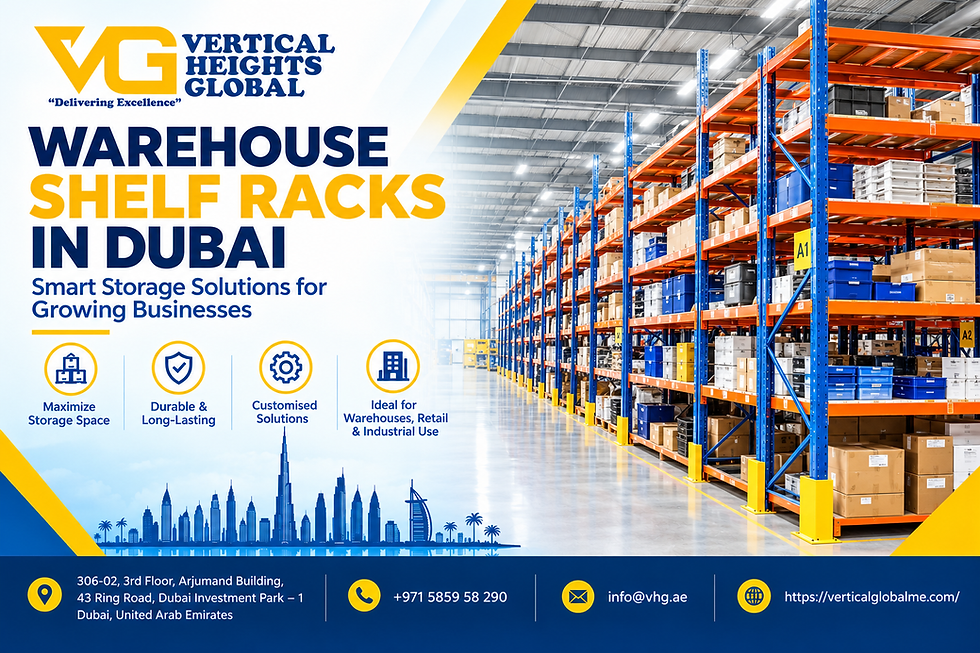
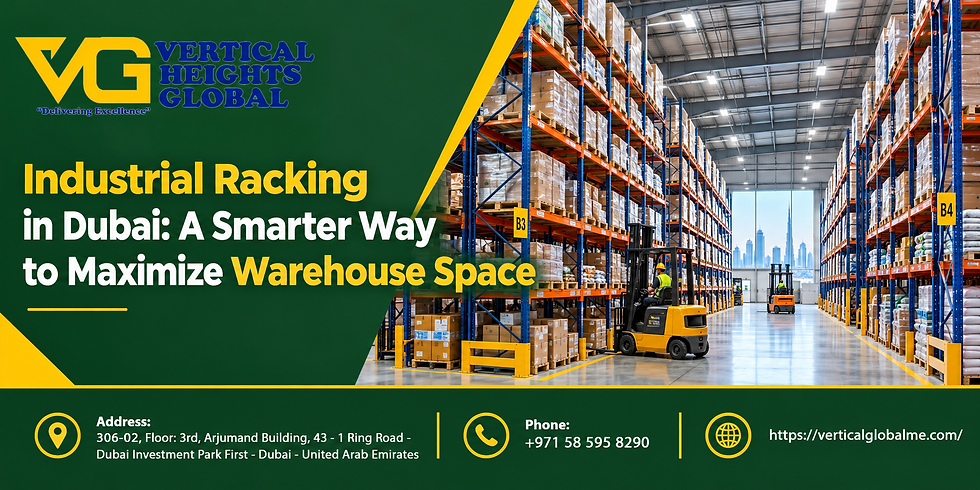
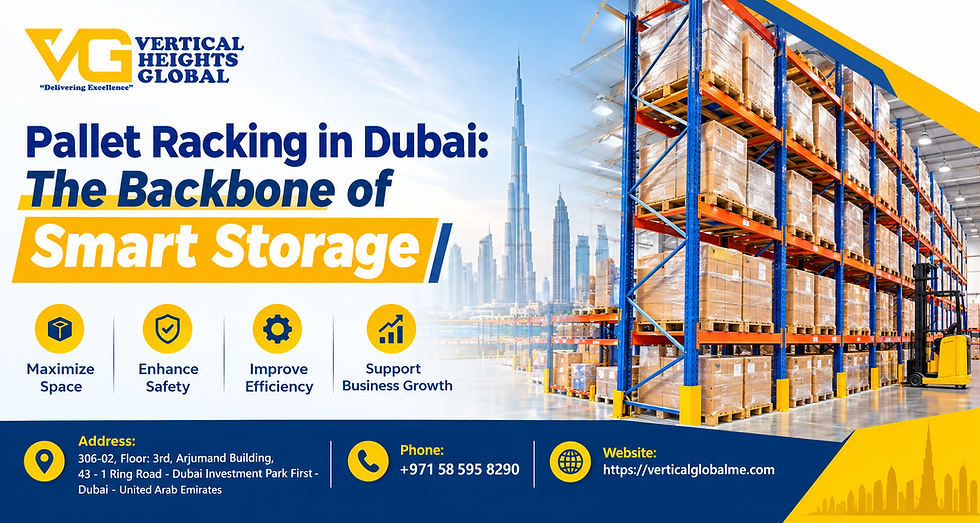
Selective Pallet Racking is the most widely used form of racking because it gives direct access to every pallet without needing to move other stock first. It suits businesses with a large variety of SKUs and moderate turnover.
Drive-In and Drive-Through Racking sacrifices some accessibility for much higher storage density. Forklifts drive directly into the racking structure, making it ideal for bulk storage of uniform products with fewer SKUs.
Warehouse Rack and Shelf Units are typically used for smaller items, spare parts, or retail stock that doesn't fit standard pallet dimensions. These combine open shelving with light-duty racking frames, and they're extremely popular among businesses that need both bulk pallet storage and small-parts organisation under one roof.
Cantilever Racking is designed for long, awkward items such as pipes, timber, or furniture that don't sit well on standard shelves.
Mezzanine and Multi-Tier Racking effectively doubles or triples usable floor space by creating an additional storage level above the ground floor, connected by stairs or lifts.
Mobile Racking Systems sit on tracks and slide together when not in use, eliminating unnecessary aisle space and dramatically increasing density — useful for cold storage or archive facilities where floor space is at a premium.
Choosing the Right Racking System for Your Facility
Selecting a system isn't just about picking whichever option looks the sturdiest. A few practical factors should guide the decision:
Load Requirements — Know the weight and dimensions of what you're storing before choosing frame gauge, beam length, and shelf spacing. Overloading racking is one of the most common causes of warehouse accidents.
Building Constraints — Ceiling height, floor load capacity, and column spacing all affect which racking configuration will actually fit. A facility with a low ceiling may benefit more from a wide warehouse rack and shelf layout than from tall selective racking.
Throughput and Access Frequency — High-turnover items need racking that allows quick access, while slow-moving stock can go into denser, less accessible systems like drive-in racking.
Future Scalability — Businesses growing quickly should choose modular racking that can be reconfigured or expanded without a full teardown.
Local Climate and Regulations — This is particularly relevant for storage racking in Dubai, where heat and humidity can affect certain materials over time, and where local safety codes dictate specific load testing and anchoring requirements.
The Growing Demand for Storage Racking in Dubai
Dubai's status as a re-export and logistics powerhouse has fuelled steady demand for efficient storage solutions. As free zones, ports, and industrial areas expand, more businesses are investing in proper racking systems rather than relying on makeshift shelving. The market today spans everything from compact retail backrooms to sprawling e-commerce fulfilment centres handling thousands of SKUs daily. The city's fast-paced trading environment means facilities often need racking that can be installed quickly, adjusted easily, and certified to meet safety standards enforced by local authorities.
Businesses sourcing storage racking in Dubai typically look for suppliers who can handle everything from design and structural calculations to installation and post-installation safety inspections. Because many warehouses operate around the clock, minimising downtime during installation is a major consideration, and experienced local suppliers understand how to plan installations around active operations.
Warehouse Racking in UAE: A Wider Regional Picture
Beyond Dubai, warehouse racking in UAE is expanding across Abu Dhabi, Sharjah, and other emirates as manufacturing, retail, and logistics sectors grow. The UAE's push toward diversifying its economy away from oil has meant heavy investment in industrial zones, cold chain logistics, and large-scale distribution centres — all of which depend on properly engineered racking systems.
One name increasingly associated with reliable racking solutions in the region is Vertical Heights Global in UAE, Dubai, known for supplying and installing a range of storage racking and warehouse rack and shelf systems tailored to local business needs. As demand grows, more businesses are recognising the value of working with suppliers who understand both the technical and regulatory landscape of this fast-growing industry.
Installation and Safety Best Practices
Even the best racking system can become a hazard if installed or maintained incorrectly. A few best practices apply across almost every facility:
Always anchor racking frames to the floor according to manufacturer specifications and local building codes.
Never exceed the rated load capacity listed on beam capacity labels.
Inspect racking regularly for bent beams, damaged uprights, or loose connectors, especially in high-traffic aisles where forklift collisions are common.
Use column protectors and guard rails near aisle ends to reduce impact damage.
Train staff on proper loading techniques, including even weight distribution across beams.
Keep aisle widths appropriate for the equipment being used, whether that's a standard forklift or a narrow-aisle reach truck.
Routine inspection isn't just good practice — in many regions, including parts of the UAE, periodic racking safety audits are becoming a compliance requirement for larger commercial warehouses.
Maintenance Tips to Extend the Life of Your Racking
A racking system is a long-term investment, and simple maintenance habits go a long way toward protecting that investment. Cleaning dust and debris from shelving regularly prevents corrosion, particularly in coastal or humid environments. Re-tightening bolts and connectors after the first few months of heavy use helps catch any settling issues early. Replacing damaged components immediately, rather than continuing to use compromised sections, prevents small problems from becoming structural failures. Finally, keeping a maintenance log helps facility managers track wear patterns and plan replacements before a failure occurs.
Conclusion
Storage racking is far more than a warehouse accessory — it's a foundational part of how efficiently a business operates. From selective pallet racking to compact warehouse rack and shelf combinations, the right system reduces wasted space, improves safety, and supports smoother day-to-day operations. As demand for storage racking in Dubai and warehouse racking in UAE continues to rise alongside the region's growing logistics and trade sectors, businesses that invest in properly planned, well-maintained racking systems position themselves to scale faster and operate more efficiently. Whether setting up a new facility or upgrading an existing one, taking the time to choose the right racking system — and maintaining it correctly — pays off in fewer accidents, faster operations, and a genuinely organised space. Ultimately, treating storage racking as a long-term operational asset, rather than an afterthought, is what separates facilities that run smoothly from those that constantly struggle to keep up with growth.
Frequently Asked Questions
1. What is storage racking used for?
It is used to organise and store goods, pallets, or inventory in a structured, space-efficient way, typically within warehouses, retail stockrooms, or distribution centres. It lifts stock off the floor, improves accessibility, and makes better use of vertical space.
2. What is the difference between racking and shelving?
Racking generally refers to heavy-duty structures designed to hold palletised loads, often accessed by forklifts, while shelving is typically lighter-duty and designed for hand-loaded items such as boxes or small parts. Many facilities use a combination, often described as warehouse rack and shelf systems, to cover both needs.
3. How much weight can a racking system hold?
Load capacity varies widely depending on the type of racking, beam length, and frame gauge. Light-duty shelving might hold a few hundred kilograms per level, while heavy-duty pallet racking can support several tonnes per beam level. A supplier should always confirm exact capacity based on your specific configuration.
4. How do I choose the right racking for my warehouse?
Consider the weight and size of items being stored, how frequently they need to be accessed, available ceiling height, and floor load capacity. It also helps to plan for future growth so the system can be reconfigured as inventory needs change.
5. Is storage racking safe for earthquake-prone or high-wind areas?
Racking can be engineered with seismic bracing or additional anchoring for regions with specific structural risks. It's important to work with suppliers familiar with local building codes to ensure the system meets required safety standards.
6. How often should racking be inspected?
Most safety guidelines recommend a formal visual inspection at least once every three to twelve months, depending on usage intensity, along with ongoing daily checks by warehouse staff for obvious damage.
7. Can racking be customised for irregular or oversized items?
Yes. Options like cantilever racking are specifically designed for long or irregularly shaped items such as pipes or timber, while custom-built racking can accommodate unusual dimensions or weights.
8. Where can I find reliable storage racking in Dubai?
Several established suppliers offer such systems, ranging from basic shelving to fully engineered pallet racking with installation and safety certification. Businesses should look for suppliers with proven experience in warehouse racking in UAE and a track record of handling both design and after-sales support, such as Vertical Heights Global in UAE, Dubai.
Comments