
Warehouse Rack and Shelf Hacks Every Business Needs


Every growing business eventually runs into the same problem: too much inventory and not enough organized space to store it. Whether you run a small distribution unit or a large-scale logistics hub, the way you store your goods directly affects how fast you can pick, pack, and ship them. This is exactly where a smart warehouse rack and shelf setup makes all the difference. It is not just about stacking boxes anymore; it is about designing a storage structure that saves time, protects inventory, and makes the best use of every square foot of your facility.
A cluttered storage area does more than slow down daily work. It increases the chance of misplaced stock, damaged goods, and even workplace accidents. On the other hand, a facility that has invested time into planning its shelving and racking layout tends to run more predictably, with staff able to locate and move items without unnecessary delays. Understanding the fundamentals before making a purchase can save businesses both money and headaches down the road.
What Is a Warehouse Rack and Shelf System?
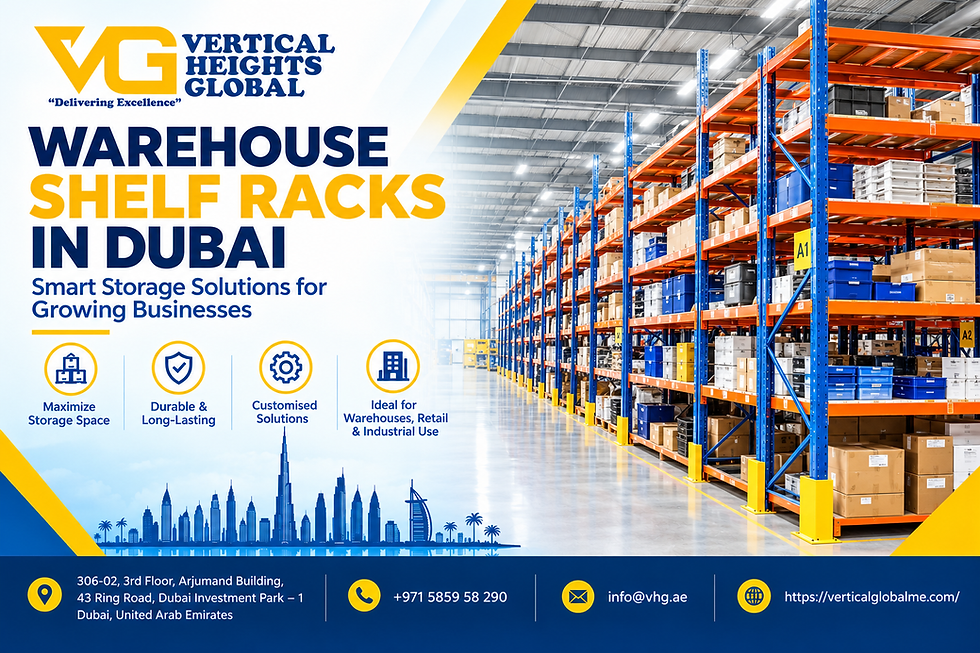
A warehouse rack and shelf system is a structured storage setup made from metal frames, beams, and decking panels designed to hold goods at different heights within a facility. Instead of piling items on the floor, businesses use vertical space to store more products safely. A good combination of racking and shelving usually includes heavy-duty uprights for load-bearing pallets, along with lighter shelving units for smaller, hand-picked items.
The idea behind this kind of setup is simple: maximize storage density while keeping every item easy to locate and retrieve. When designed correctly, this type of storage structure reduces walking time for staff, minimizes damage to stock, and creates a safer working environment overall. It also gives managers greater flexibility to reorganize inventory as demand shifts, without having to rebuild the entire storage area from scratch.
Most facilities combine several storage formats rather than relying on just one. A distribution center handling bulky pallets might rely heavily on beam racking near the loading dock, while a picking zone closer to the packing tables uses lighter, more accessible shelving. This blended approach lets a business match the right storage format to the right product, rather than forcing every item into a single, one-size-fits-all layout.
Why Businesses Are Investing in a Pallet Racking System in Dubai
Dubai has grown into one of the busiest trade and logistics centers in the region, and with that growth comes an increasing need for efficient storage infrastructure. Companies importing and re-exporting goods through the emirate often deal with large, palletized shipments that require sturdy, adjustable racking rather than basic shelving.
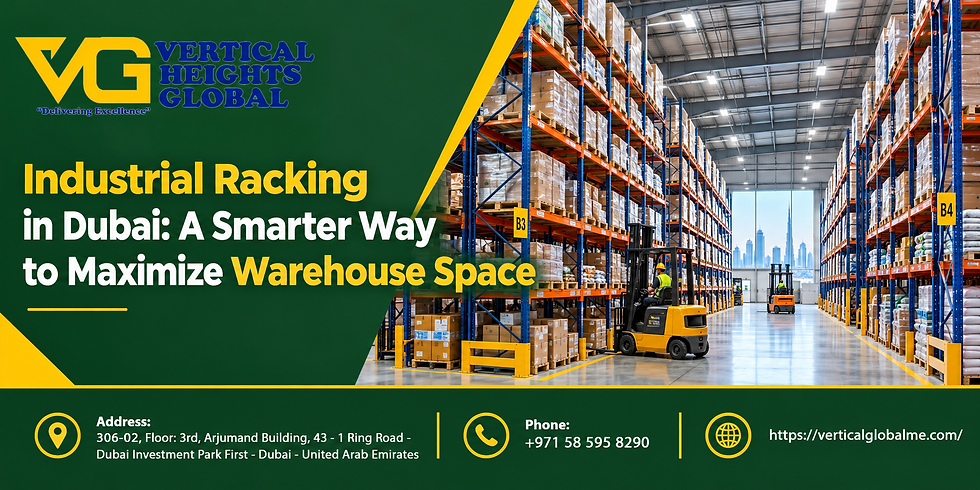
A well-planned pallet racking system in Dubai allows warehouses to store bulk goods vertically, freeing up valuable floor space for movement, loading, and staging areas. Because rental costs for warehouse space in the city can be high, businesses are increasingly choosing to invest in taller, denser racking structures instead of renting additional floor area. This shift has made a reliable, well-engineered racking layout one of the smartest long-term investments a logistics or trading company can make.
Beyond cost savings, there is also a growing focus on operational speed. E-commerce fulfillment, spare parts distribution, and food and beverage storage all have different handling requirements, and each benefits from racking that is built around its specific workflow rather than a generic, off-the-shelf design.
Local suppliers, including established names like Vertical Heights Global in UAE, Dubai, have responded to this demand by offering customized racking solutions built to match the specific dimensions, load capacities, and layout requirements of individual warehouses. Working with a supplier who understands local building codes, forklift specifications, and climate conditions can make a noticeable difference in the durability and safety of the final setup.
Types of Warehouse Shelf Racks You Should Know About
Not every storage need is the same, so it helps to understand the different types of warehouse shelf racks available before making a purchase.
Selective Pallet Racking is the most common type found in warehouses. It allows direct access to every pallet, making it ideal for facilities with a wide variety of SKUs.
Drive-In and Drive-Through Racking works well for businesses storing large quantities of the same product, since forklifts can drive directly into the racking lanes.
Cantilever Racking is designed for long, bulky items like pipes, timber, or steel bars that do not fit well on standard shelving.
Boltless Shelving Units are commonly used for lighter, hand-picked goods such as spare parts, cartons, or retail stock. These warehouse shelf racks are easy to assemble, reconfigure, and move around as storage needs change.
Mezzanine Racking Systems add an entire additional storage level within the same footprint, effectively doubling usable space without expanding the building. When paired with lighter warehouse shelf racks on the upper level, mezzanines are especially useful for archiving, spare parts, or overflow stock.
Choosing between these warehouse shelf racks depends on your inventory type, turnover rate, and how your team physically accesses stock on a daily basis.
Smart Hacks to Get More Out of Your Storage Space
1. Measure Before You Buy
One of the most common mistakes businesses make is purchasing racking without properly measuring ceiling height, aisle width, and forklift turning radius. A poorly measured storage setup can lead to wasted space or, worse, safety hazards. Taking accurate measurements upfront, and double-checking them against manufacturer specifications, is one of the simplest ways to avoid costly reordering later on.
2. Label Everything Clearly
A simple labeling system using barcodes or color codes can dramatically cut down picking time. When every shelf and rack level is clearly marked, staff spend less time searching and more time working.
3. Store Heavy Items Lower
Placing heavier pallets on lower rack levels reduces the risk of tipping and makes loading and unloading safer for warehouse staff.
4. Use Vertical Space Wisely
Many warehouses only use the bottom few feet of available height. Extending your racking structure upward, where safely possible, can significantly increase storage capacity without needing extra floor area. High-bay installations paired with narrow-aisle forklifts are a common way businesses unlock this unused vertical space.
5. Group Fast-Moving Items Near Loading Zones
Placing high-turnover products closer to dispatch areas reduces travel time for pickers and speeds up order fulfillment.
6. Plan for Growth
When investing in a pallet racking system in Dubai or anywhere else, always leave room for expansion. Modular racking that can be extended later saves money compared to replacing an entire system as your business grows. It also means seasonal spikes in demand can be absorbed by adding extra bays instead of scrambling for temporary storage.
7. Schedule Regular Inspections
Racking should be inspected periodically for bent frames, loose bolts, or damaged beams. Small issues, if left unchecked, can turn into serious safety risks. Many businesses keep a simple inspection checklist near each aisle so that supervisors and staff can flag problems as soon as they notice them, rather than waiting for a scheduled audit.
8. Train Staff on Safe Handling
Even the best-designed racking system can become unsafe if staff are not trained properly. Employees should know weight limits for each level, how to load and unload pallets safely, and what to do if they spot a damaged frame. A short, recurring training session goes a long way toward preventing accidents and extending the lifespan of your equipment.
Benefits of a Well-Planned Warehouse Rack and Shelf Layout
A properly designed racking and shelving layout offers more than just storage. It improves overall operational efficiency in several ways:
Faster order fulfillment because items are easy to locate and access.
Reduced product damage since goods are stored securely instead of stacked loosely.
Better use of floor space, allowing businesses to store more without expanding their facility.
Improved safety for warehouse staff, reducing the risk of falling stock or tipping shelves.
Easier inventory audits, since organized racks make stock counts faster and more accurate.
These benefits compound over time, especially for businesses that handle seasonal demand spikes or fast-changing product lines. Over a few years, the time saved on picking and restocking alone can offset the initial cost of upgrading a facility's storage infrastructure, making it a decision that pays for itself well before the racking needs replacing.
Choosing the Right Pallet Racking System in Dubai for Your Business
When selecting racking for a facility in the emirate, consider the following factors:
Load Capacity – Know the average and maximum weight of your pallets before choosing beam and frame specifications.
Warehouse Height – Taller facilities can benefit from narrow-aisle or high-bay racking to maximize vertical storage.
Forklift Compatibility – Aisle widths should match the turning radius of the equipment your team uses daily.
Climate Considerations – Coatings and materials should be suited to the local climate to prevent corrosion over time.
Local Compliance – Racking should meet regional safety and building standards.
Budget and Long-Term Value – Weigh upfront cost against durability, warranty coverage, and after-sales support before making a final decision.
Working with an experienced supplier ensures your warehouse rack and shelf investment is designed around your actual operational needs rather than a generic, one-size-fits-all layout. Asking for a site visit before finalizing a design also helps catch potential issues, such as uneven flooring or low-hanging beams, that could affect installation later.
What People Search For Related to Warehouse Racking
Understanding what people commonly search for around this topic can help business owners make more informed decisions. Search patterns typically include queries about pricing, installation, safety standards, and comparisons between racking types. People often look for information on how much a pallet racking setup costs, how to calculate the right rack size for their warehouse, and how to compare selective racking against drive-in systems.
Others search for guidance on maintaining warehouse shelf racks, understanding weight limits, or finding suppliers who offer installation along with the equipment itself. There is also strong interest in searches around warranty terms, delivery timelines, and whether a supplier can handle both design and on-site assembly. Some searches are more practical in nature, such as how to reconfigure existing shelving after a warehouse move, or how to safely dismantle and relocate racking without damaging the frames.
These search trends reflect a growing awareness among business owners that storage infrastructure is not a one-time purchase but an ongoing part of operational planning. As e-commerce and regional trade continue to expand, more businesses are researching this topic before their storage needs become urgent, rather than after space runs out.
Conclusion
A well-organized warehouse rack and shelf system is one of the most practical investments a growing business can make. From improving safety and speeding up order fulfillment to making the most of limited floor space, the right storage setup pays off in ways that go far beyond simply holding inventory. For businesses operating in fast-paced trade hubs, choosing a reliable pallet racking system in Dubai, paired with the right mix of warehouse shelf racks, can be the difference between a warehouse that struggles to keep up and one that runs smoothly even during peak demand. Taking the time to plan, measure, and choose the right structures today will save both time and money for years to come.
Frequently Asked Questions
1. What is the difference between warehouse racking and warehouse shelving?
Racking is typically engineered for palletized loads accessed by forklifts, while shelving is designed for smaller, hand-picked items accessed manually. Many facilities use both together depending on the type of inventory.
2. How do I choose the right size for my warehouse racks?
Start by measuring your ceiling height, aisle width, and the dimensions of your pallets or stored items. It also helps to factor in your forklift's turning radius and reach height before finalizing rack dimensions.
3. How much weight can a standard pallet rack hold?
Weight capacity varies by design, but standard selective pallet racking often supports anywhere from a few hundred to several thousand kilograms per level, depending on the beam and frame specifications used.
4. How often should warehouse racks be inspected?
Most safety guidelines recommend inspecting racking systems at least once every few months, along with immediate checks after any forklift collision or visible damage.
5. Can warehouse racks be customized for irregular spaces?
Yes, most racking suppliers offer customized frame heights, beam lengths, and configurations to fit irregular warehouse layouts, including low ceilings or narrow columns.
6. What is the best racking type for a small warehouse?
Selective pallet racking or boltless shelving units are generally the most practical choices for smaller facilities, since they offer flexibility without requiring specialized equipment.
7. How long does it take to install a pallet racking system?
Installation time depends on the size of the warehouse and complexity of the design, but most standard installations can be completed within a few days to a couple of weeks.
8. Is it better to buy new or used warehouse racking?
New racking usually comes with warranties and guaranteed load ratings, while used racking can be a budget-friendly option if inspected thoroughly for structural integrity before purchase.

Comments