
Storage Racking Hacks That Transform Any Warehouse

Updated: Aug 6

Every warehouse manager reaches a point where floor space feels impossible to stretch any further. Pallets pile up in aisles, pickers waste time hunting for stock, and forklifts squeeze through gaps that were never meant to be this tight. The fix almost always comes down to one thing: the storage racking you choose and how you use it. Storage racking is not just steel and shelves — it is the framework that decides how much product you can hold, how fast your team can move, and how safely your facility runs day to day.
This article walks through practical storage racking hacks, explains what businesses across the region are searching for when they look into warehouse shelving in Dubai, and breaks down how a properly planned warehouse racking system can turn a cramped, chaotic space into an organized, high-output operation.
Why Storage Racking Is the Foundation of Warehouse Efficiency
Before adding a single new hack, it helps to understand why storage racking matters so much. A warehouse without a proper racking layout wastes vertical space, forces longer travel paths, and increases the risk of damaged stock or workplace accidents. Good storage racking does the opposite — it uses height instead of floor footprint, groups similar items for faster picking, and keeps aisles clear enough for equipment to move safely.
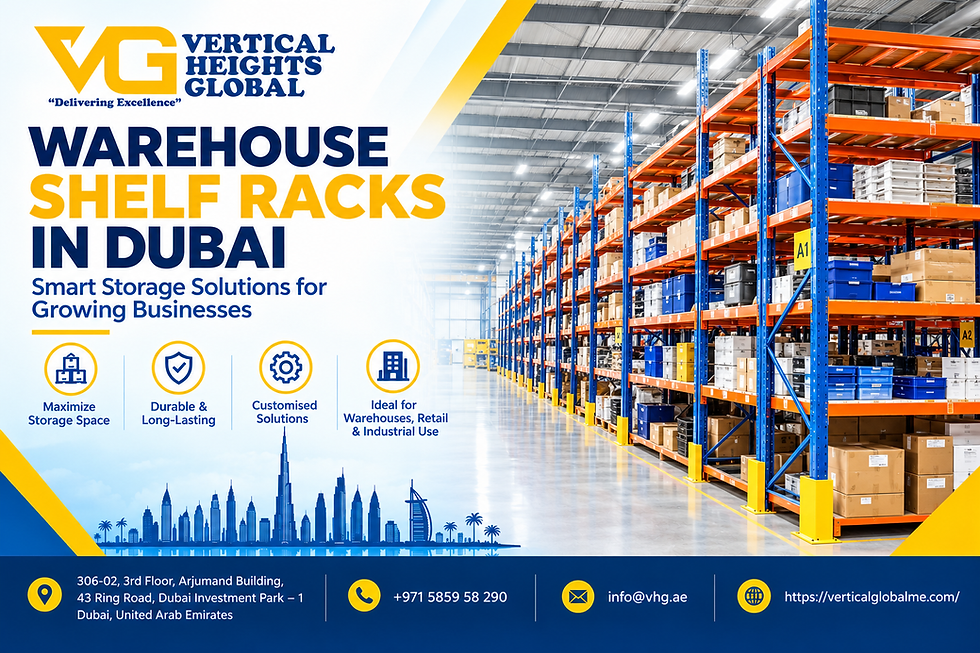
Businesses that upgrade from ad-hoc shelving to an engineered warehouse racking system typically report faster order fulfillment, fewer inventory errors, and better use of overhead space that would otherwise sit empty. In a market like the UAE, where commercial rent is a major operating cost, getting more storage out of the same square footage has a direct impact on the bottom line. This is one reason demand for warehouse shelving in Dubai has grown steadily as logistics, e-commerce, and retail distribution activity expands across the emirate.
Hack One: Go Vertical Before You Go Wider
The single biggest mistake warehouses make is spreading inventory outward instead of upward. Storage racking is designed to exploit ceiling height, and most facilities only use a fraction of the vertical space available to them. Selective pallet racking, for example, can typically reach heights that double or triple the storage density of ground-level stacking, all within the same footprint. Before signing a lease for extra square footage, it is worth auditing how much unused vertical space already exists above current stock.
Hack Two: Match the Racking Type to the Product
Not every product belongs on the same kind of shelf. A warehouse racking system should be selected based on load weight, pallet size, turnover speed, and picking method. Fast-moving retail goods often suit selective racking with easy single-pallet access, while bulk, low-turnover items are better suited to drive-in or push-back racking that maximizes density. Mismatched racking is one of the most common causes of wasted space and slow picking, and it is a mistake that shows up repeatedly in facility audits across warehousing hubs, including operations searching for warehouse shelving in Dubai to replace outdated or generic shelving units.
Hack Three: Plan Aisle Width Around Equipment, Not Guesswork
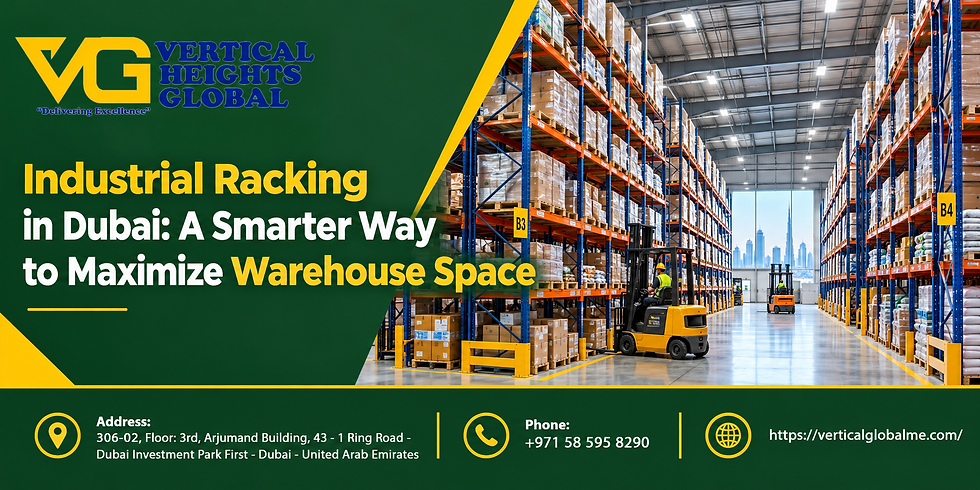
Aisle width is often set by habit rather than calculation. Narrow-aisle storage racking paired with the right forklift or reach truck can significantly increase usable storage without extending the building. On the other hand, aisles that are too narrow for the equipment in use create bottlenecks and safety hazards. The right approach is to design the racking layout around the specific handling equipment on site, not the other way around.
Hack Four: Use Labeling and Zoning to Cut Picking Time
Storage racking becomes far more powerful when it is paired with a clear labeling and zoning system. Grouping stock by SKU velocity, size, or order frequency reduces the distance pickers travel and speeds up fulfillment. Many facilities pair their warehouse racking system with barcode or QR-based location tags, which also makes stock counts and audits far quicker and more accurate.
Hack Five: Build In Safety From the Start
Racking failures are rare when systems are installed and loaded correctly, but the consequences are severe when they are not. Every storage racking installation should include load capacity signage, regular inspection schedules, and protective barriers around exposed frame corners in high-traffic zones. A warehouse racking system that looks efficient on paper but ignores safety guidelines ends up costing far more in downtime, damaged stock, or injury claims than it ever saves in storage density.
Hack Six: Plan for Growth, Not Just Current Stock
A common regret among warehouse operators is choosing racking that fits today's inventory but cannot scale. Modular storage racking systems allow additional bays, levels, or accessories to be added later without a full teardown. This is particularly relevant for growing businesses evaluating warehouse shelving in Dubai, where rapid expansion in e-commerce and trade logistics means storage needs can change within a single year.
Hack Seven: Factor in Long-Term Maintenance, Not Just Installation
A warehouse racking system is a long-term structural investment, and treating it as a one-time purchase is a common oversight. Frames get bumped by forklifts, beams loosen over time, and floor anchors can shift with heavy, repeated loading. Building a routine inspection schedule into warehouse operations — checking for bent uprights, damaged beams, or missing safety pins — extends the working life of the storage racking and prevents small issues from becoming structural failures. Facilities that treat maintenance as part of the racking plan from day one tend to avoid the costly emergency repairs that catch unprepared operators off guard.
Understanding Cost Before You Commit
Cost is almost always the first question businesses ask when evaluating storage racking, and it is also one of the hardest to answer with a single number. Pricing depends on the type of racking, the height and load capacity required, the quality of steel used, and whether installation and layout design are included. A basic selective racking setup will cost far less per pallet position than a high-density drive-in or push-back system, but the cheaper option is not always the better long-term value if it does not match how the warehouse actually operates.
For businesses comparing warehouse shelving in Dubai, cost estimates typically include the racking components themselves, delivery, professional installation, and any additional safety accessories such as guardrails or column protectors. Getting a detailed, itemized quote from more than one provider is the most reliable way to understand true cost before committing to a full warehouse racking system rollout.
What People Search For Around Storage Racking
Search behavior around this topic tends to cluster into a few clear categories, and understanding them helps explain why this subject generates so much interest online.
Cost and comparison searches — many searches focus on pricing, such as comparisons between new and used systems, or cost per pallet position. Buyers want to understand budget ranges before contacting a supplier.
Type and application searches — a large share of search volume revolves around identifying which racking type suits a specific use case, such as cold storage, bulk pallet storage, or small parts shelving.
Local supplier searches — location-based searches, including terms like warehouse shelving in Dubai, reflect buyers who are ready to source a system locally rather than research generically. These searches often lead to supplier comparisons, installation timelines, and delivery capability.
Safety and compliance searches — questions about load capacity, inspection requirements, and installation standards are consistently popular, especially among facility managers responsible for workplace safety.
Design and layout searches — many users search for layout guidance, aisle width standards, and space-maximization tips, which is exactly the kind of practical guidance this article covers.
Recognizing these patterns is useful whether you are a warehouse manager researching your next upgrade or a business owner trying to understand what your logistics team is asking for when they mention a new warehouse racking system.
Choosing the Right Partner for Installation
Selecting storage racking is only half the job — correct installation and layout design determine whether the system actually performs as intended. Facilities looking for warehouse shelving in Dubai often work with regional specialists who understand local building codes, climate-related storage considerations, and the pace of the logistics sector here. Vertical Heights Global in UAE, Dubai is one example of a regional provider working in this space, offering planning and installation support for businesses upgrading their storage infrastructure.
Whatever provider a business chooses, the priorities should remain the same: accurate load calculations, a layout that matches actual product flow, and a system that can be inspected and maintained easily over its working life.
Conclusion
Storage racking is one of the highest-impact investments a warehouse can make, and small adjustments — going vertical, matching racking type to product, planning aisle width deliberately, zoning stock intelligently, prioritizing safety, and building in room to grow — can transform a cramped facility into a smooth, high-capacity operation. As demand for warehouse shelving in Dubai continues to rise alongside the region's logistics and e-commerce growth, businesses that treat their warehouse racking system as a strategic asset, rather than an afterthought, will consistently outperform those that don't. The warehouses that get the most out of their space are rarely the biggest ones — they are the ones that plan their racking with intention.
Frequently Asked Questions
1. What is the difference between storage racking and regular shelving?
Storage racking is engineered to hold heavier, palletized loads and is typically designed for forklift access, while regular shelving is meant for lighter, hand-loaded items. Racking systems also allow for far greater height and load capacity than standard shelving units.
2. How do I choose the right storage racking for my warehouse?
The right choice depends on product weight, pallet size, turnover speed, ceiling height, and how the stock is picked. A facility with fast-moving goods generally needs different racking than one storing bulk, low-turnover inventory.
3. What is the standard weight capacity of a storage racking system?
Capacity varies by design, but standard pallet racking often supports a few thousand pounds per level, while heavy-duty systems can hold significantly more. Exact capacity should always be confirmed with load charts from the manufacturer or installer.
4. Is it better to buy new or used racking?
New racking comes with manufacturer warranties and verified load capacities, making it the safer option for long-term use. Used racking can be more budget-friendly but carries more uncertainty around wear, history, and exact weight tolerances.
5. How much space should be left for aisles in a warehouse racking system?
Aisle width should be based on the turning radius and size of the equipment being used, whether that's a standard forklift, reach truck, or narrow-aisle vehicle. Measuring equipment specifications before finalizing the layout prevents costly redesigns later.
6. What safety measures are required for storage racking?
Key measures include clear load capacity signage, regular structural inspections, protective corner and column guards, and proper anchoring to the floor. Facilities should also train staff on safe loading practices to avoid overloading individual levels.
7. Can storage racking be customized for different warehouse sizes?
Yes, most racking systems are modular, meaning bays, levels, and accessories can be added or adjusted as a business grows or its inventory changes. This makes it possible to start with a smaller layout and expand without a full system replacement.
8. How do I find reliable warehouse shelving in Dubai?
Look for suppliers with local installation experience, a track record of handling load calculations correctly, and the ability to service ongoing maintenance and inspections. Comparing a few regional providers, including looking into their project history and compliance knowledge, helps ensure the system fits both your budget and your building's requirements.

Comments