
Smart Warehouse Storage Racks That Boost Efficiency


Every warehouse manager eventually faces the same problem: too much stock and not enough usable floor space. The fix isn't always a bigger building — it's usually a smarter storage layout. This is exactly where warehouse storage racks come in. They turn empty vertical space into usable storage, cut down on wasted movement, and make it far easier for staff to find, pick, and move goods without stepping on each other's toes.
Why Warehouse Storage Racks Matter More Than Most People Realize
A warehouse without proper racking is essentially a room full of boxes stacked on the floor, hoping nothing topples over. That approach might work for a small store, but it collapses quickly once inventory volume grows. A well-planned rack system solves this by organizing goods into clearly defined, labeled, and easily reachable positions.
The benefits go beyond just "looking tidy." Good racking:
Frees up floor space by pushing storage upward instead of outward
Reduces product damage caused by stacking boxes directly on top of one another
Speeds up picking and dispatch because every item has a fixed, known location
Improves workplace safety by keeping aisles clear and loads secured
Makes stock counting and inventory audits far less time-consuming
For growing businesses — especially those handling e-commerce fulfillment, retail distribution, or manufacturing components — sturdy industrial racking isn't a luxury. It's the backbone of daily operations.
What People Actually Search For Related to This Keyword
Before buying, most people don't type "buy racking online" straight away. Search behavior tends to move through stages, and understanding this helps explain why so much content around this topic exists.
Early-stage searches usually revolve around understanding options: "types of warehouse racking systems," "difference between shelving and racking," or "how much weight can a pallet rack hold." People at this stage are still figuring out what kind of storage fits their space and product type.
Mid-stage searches get more specific: "best racking supplier in Dubai," "warehouse rack and shelf suppliers near me," "heavy duty racks for cold storage," or "racking system installation cost." These searchers already know they need racks — they're now comparing formats, capacities, and local suppliers.
Late-stage searches are transactional: "racking price list," "racking installation company," or "custom racks for small warehouse." This is where buyers are ready to request quotes or book a site visit.
Recognizing these patterns matters because it shows that a single search term actually represents several different buyer intents — informational, comparative, and transactional — all under one umbrella.
Common Types of Warehouse Storage Racks
Not every business needs the same rack style. Choosing the wrong one wastes money and space, so it helps to know the main categories before deciding.
Selective pallet racking is the most widely used format. It gives direct access to every pallet, which makes it ideal for warehouses with many different SKUs that need frequent picking.
Drive-in and drive-through racking allow forklifts to enter the rack structure itself, storing pallets several rows deep. This works well when you're storing large volumes of the same product and don't need to access every pallet individually.
Cantilever racking uses arms extending from a central column rather than traditional shelves, making it suited to long or irregularly shaped items like pipes, timber, or furniture panels.
Push-back racking uses inclined rails and nested carts, letting pallets be loaded from the front and pushed back as new stock arrives — a practical middle ground between accessibility and density.
Mezzanine and multi-tier racks add an entirely new storage level within the existing building height, which is especially valuable in regions where warehouse rent is high and expanding the footprint isn't realistic.
Each of these formats falls under the broader category of industrial pallet racking, but the right pick always depends on pallet size, product weight, turnover speed, and available floor-to-ceiling height.
Pallet Racking System in Dubai: Local Considerations That Matter
Setting up a pallet racking system in Dubai isn't quite the same as doing it in a cooler, less humid climate. The region's warehouses often deal with high summer temperatures, dust exposure, and rapid growth in logistics and e-commerce activity — all of which shape how racking should be designed and installed.
Local warehouses frequently need racking that supports high-volume, fast-turnover storage because Dubai operates as a major regional distribution hub. Many facilities serve as transit points for goods moving across the Gulf, which means picking speed and load capacity both matter more than they might in a smaller domestic warehouse.
Heat and dust also affect material choice. Steel used in local racking setups typically needs protective coatings to resist corrosion and wear over time, particularly in coastal or industrial zones. Compliance with UAE safety codes is another factor — racks need to be engineered to handle structural safety requirements set by local authorities, and installation should always be carried out by teams familiar with these regulations.
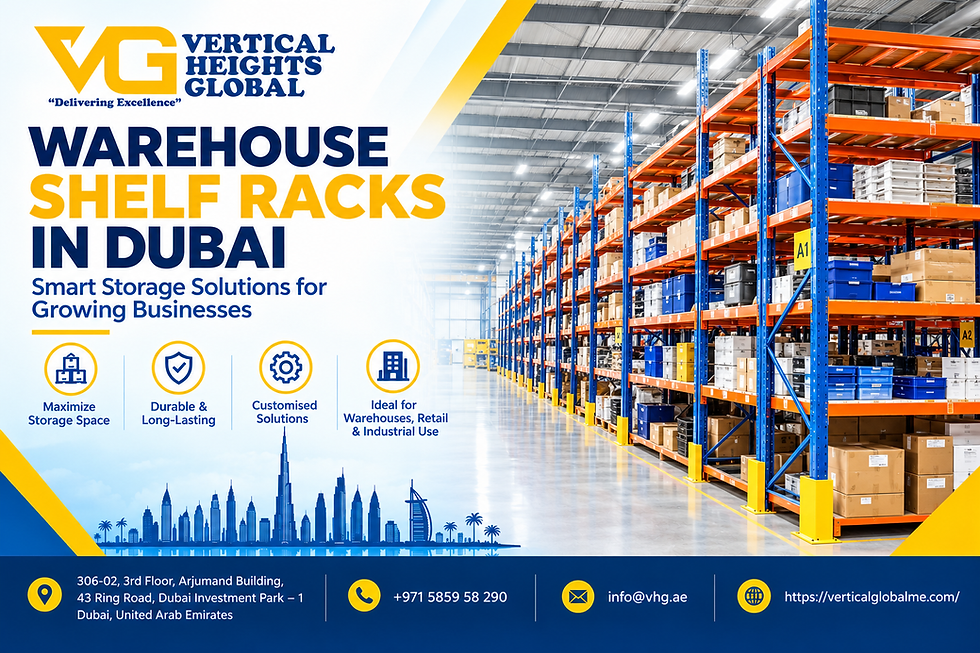
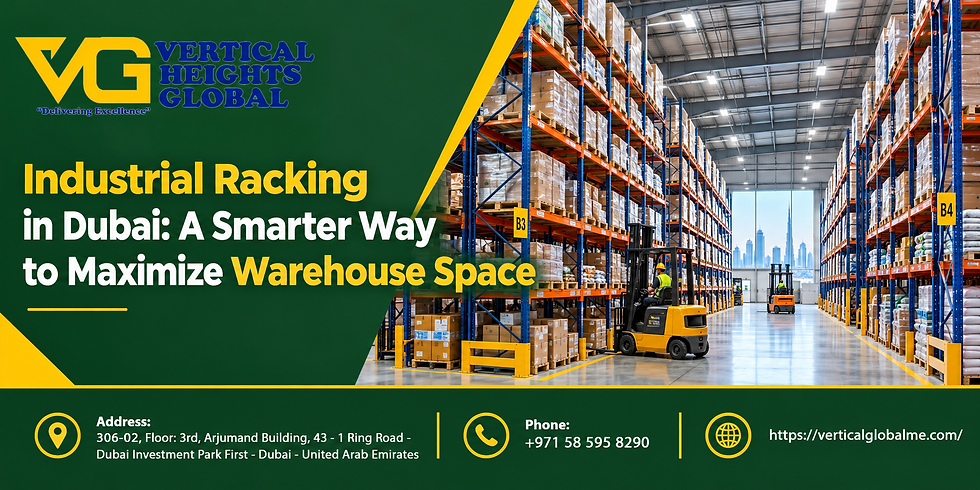
For businesses sourcing local racking, working with a supplier who understands both the climate-related demands and the fast-paced logistics environment tends to produce better long-term results than opting for a generic, one-size-fits-all setup. Vertical Heights Global in UAE, Dubai is one such provider known for tailoring rack designs to the specific handling and storage needs of local warehouses, rather than applying a standard template across every project.
Warehouse Rack and Shelf: Understanding the Difference
People often use "rack" and "shelf" interchangeably, but in warehouse design they serve different purposes, and knowing the distinction helps when planning storage layouts.
A warehouse rack and shelf system typically work together rather than as substitutes. Racks are built to hold heavy, palletized loads and are usually accessed with forklifts or pallet jacks. Shelving units, on the other hand, are designed for lighter, smaller, or loose items — think spare parts, small cartons, or manually picked goods that don't require mechanical handling.
Many modern warehouses combine both: pallet racks for bulk storage in the main aisles, and shelving units in picking zones where staff handle smaller quantities by hand. This hybrid approach improves efficiency because it matches the storage method to the actual size and handling needs of each product category, instead of forcing every item into the same format.
When planning a layout, it helps to map out your inventory first — separating bulk, palletized stock from small-item or fast-moving picks — and then decide which zones need racks, which need shelving, and where a combined setup makes the most sense.
How to Choose the Right Storage Rack for Your Warehouse
Selecting the right racks isn't a decision to rush. A few practical questions can guide the process:
What are you storing? Palletized bulk goods, small parts, or irregular items each call for a different rack style.
How much does it weigh? Weight capacity varies significantly between rack types, so always check load ratings against your heaviest expected pallet.
How often do you need access? High-turnover stock benefits from selective racking, while slow-moving bulk goods can go into denser drive-in systems.
What's your ceiling height? Taller spaces allow multi-tier racking or mezzanines, which can dramatically increase capacity without expanding the building.
What equipment do you use? Forklift type and aisle width requirements need to match the racking layout, or you'll end up with bottlenecks.
Is the environment a factor? Humidity, dust, or temperature extremes — like those common across the UAE — may call for coated or reinforced materials.
Getting these details right upfront avoids costly redesigns later and ensures the racks actually support how the warehouse operates day to day.
Maintenance and Safety Considerations
Once installed, racking needs regular attention. Over time, forklift collisions, overloading, or corrosion can weaken the structure. Routine inspections should check for bent frames, loose bolts, and damaged beams. Clear weight-limit signage should be posted on every rack bay, and staff should be trained never to exceed it. Keeping a simple inspection log also makes it easier to track recurring problem areas and plan repairs before they turn into safety incidents.
Aisle widths should stay consistent with the equipment being used, and any damaged components should be replaced immediately rather than left in place. A well-maintained storage system doesn't just protect inventory — it protects the people working around it every day.
Conclusion
Choosing the right warehouse storage racks isn't just about filling empty space — it's about building a layout that supports how your business actually operates. Whether you're comparing rack types for the first time, sourcing a pallet racking system in Dubai suited to local climate and safety demands, or balancing a warehouse rack and shelf combination for mixed inventory, the goal stays the same: safer storage, faster picking, and better use of every square meter you have. Taking the time to match rack type to inventory, weight, and access needs now will save both money and operational headaches later.
Frequently Asked Questions
1. What is the difference between warehouse racking and warehouse shelving?
Racking is generally designed for heavier, palletized loads accessed by forklifts, while shelving suits lighter, smaller items that are picked manually. Many warehouses use both together depending on the product mix.
2. How much weight can warehouse storage racks hold?
Capacity varies widely by design, ranging from a few hundred kilograms per shelf level in light-duty units to several tons per pallet position in heavy-duty selective racking. Always confirm load ratings with the manufacturer before storing inventory.
3. What type of racking is best for a small warehouse?
Selective pallet racking is usually the best starting point for smaller spaces since it offers direct access to every pallet without requiring wide aisles for deep-reach equipment.
4. How is a pallet racking system in Dubai different from racking used elsewhere?
Local systems often need corrosion-resistant coatings due to heat and humidity, along with compliance with UAE structural and safety codes, since Dubai's climate and logistics volume place extra demands on rack durability.
5. How often should warehouse racks be inspected?
Most safety guidelines recommend a formal visual inspection at least every three to twelve months, alongside routine daily checks by warehouse staff for obvious damage like bent frames or loose connections.
6. Can warehouse storage racks be customized for irregular items?
Yes. Cantilever racking, for example, is specifically designed for long or oddly shaped items such as pipes or timber that don't fit standard pallet dimensions.
7. What factors affect the cost of a warehouse rack and shelf setup?
Cost depends on rack type, material gauge, height, load capacity, and installation complexity. Denser systems like drive-in racking or automated shuttle systems typically cost more than basic selective racking.
8. Do warehouse racks require professional installation?
Yes, professional installation is strongly recommended. Improperly installed racking can lead to structural failure, product damage, or serious injury, so working with an experienced installer familiar with local safety codes is essential.

Comments