
Beyond Shelves : How Storage Racking Transforms Storage


Warehouses today are judged by how much they can hold, how fast they can move goods, and how safely they can operate. At the center of that equation sits one piece of equipment that rarely gets the credit it deserves: storage racking. It is easy to think of it as nothing more than metal shelving, but that view misses the bigger picture. This equipment is an engineered system that shapes how a facility breathes, how workers move, and how much profit a business can squeeze out of every square meter it rents or owns.
This article looks at why storage racking has become the backbone of modern logistics, how a pallet racking system differs from ordinary shelving, what businesses handling pallets in Dubai should know before investing, and how a well-planned warehouse racking system can change the entire trajectory of a growing company.
Why Storage Racking Matters More Than Ever
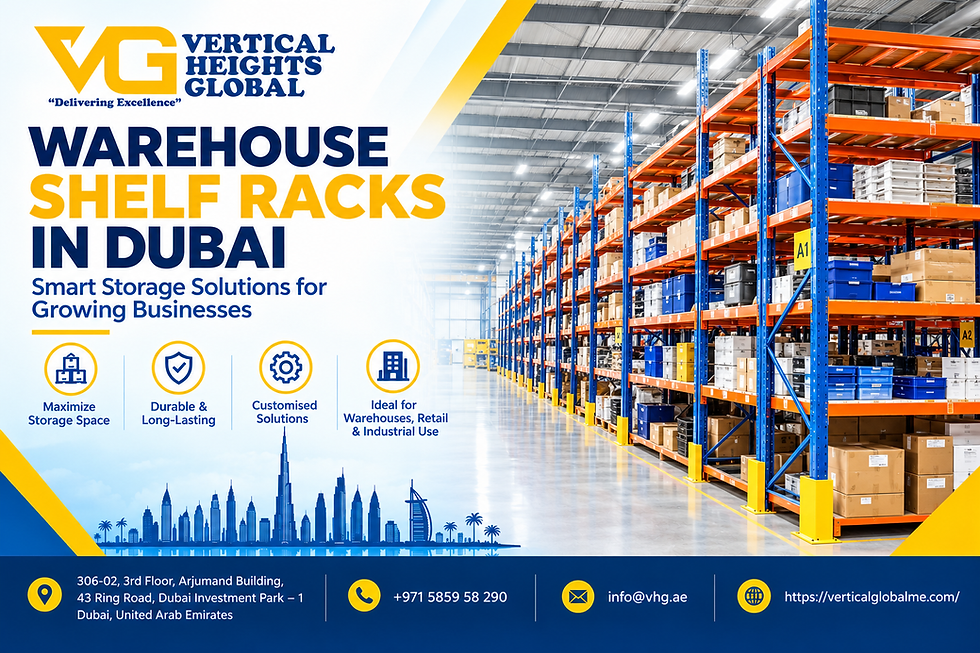
E-commerce, manufacturing, and retail distribution have all pushed warehouses to hold more inventory in less time. When floor space is limited but demand keeps rising, the only direction left to expand is upward. That is exactly what this approach allows a business to do. Instead of stacking boxes directly on the floor, where they risk damage, poor visibility, and wasted aisle space, this equipment lifts inventory into organized, accessible tiers.
A thoughtfully designed layout does more than save space. It reduces the time workers spend searching for items, it lowers the risk of accidents caused by unstable stacking, and it makes stock counts far more accurate because every product has a fixed, labeled location. Businesses that once struggled with cluttered floors and mismatched inventory records often find that a single overhaul of their shelving solves most of those problems at once.
There is also a financial angle that owners appreciate. Real estate, whether leased or owned, is one of the largest recurring costs a warehouse operator faces. Every meter of unused vertical space is money left on the table. A good racking setup converts that empty air into usable storage, which means a business can grow its inventory without signing a lease for a bigger building.
Understanding a Pallet Racking System
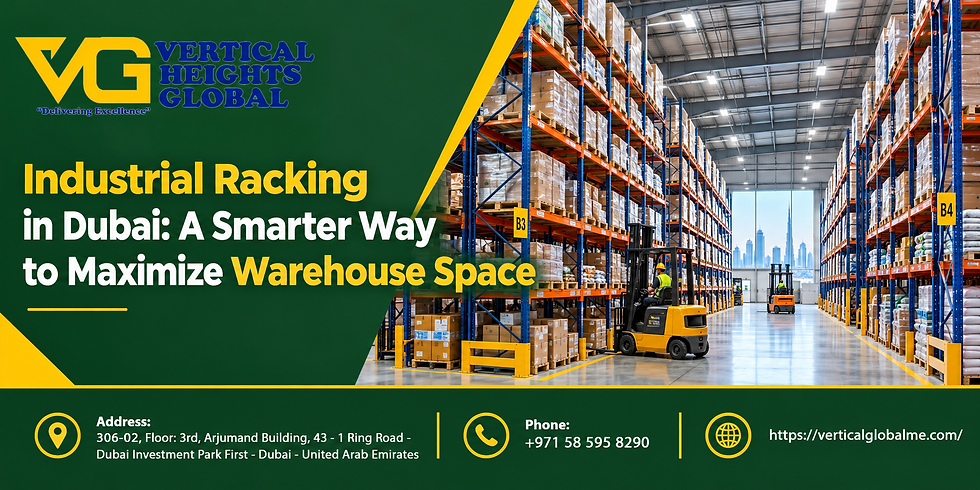
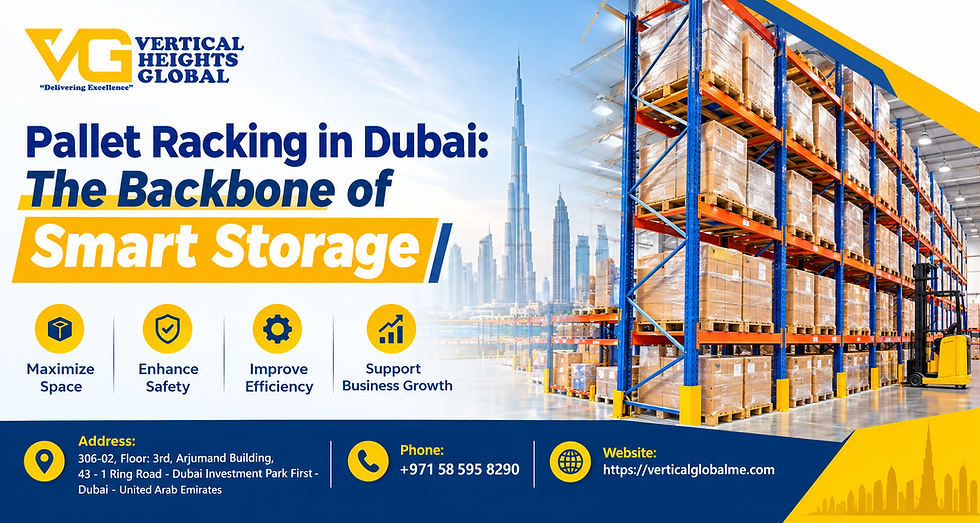
A pallet racking system is the most common form of industrial racking used in distribution centers, factories, and cold storage facilities. Unlike light-duty shelving meant for small parts or retail displays, this type of setup is built to carry heavy, palletized loads that are moved with forklifts or reach trucks.
There are several configurations within this category, and choosing the right one depends on order frequency, load weight, and how quickly stock turns over. Selective racking, for example, allows direct access to every pallet, which suits businesses with many different SKUs that need to be picked individually. Drive-in and drive-through configurations sacrifice some accessibility in exchange for much higher density, which works well for businesses storing large quantities of a smaller number of products. Push-back and pallet flow variants add rollers or inclined rails so that pallets move automatically as stock is picked, which is ideal for high-turnover operations.
Choosing the wrong configuration can quietly cost a business money for years. A drive-in setup installed for a business that needs constant access to mixed pallets will slow down picking. A selective layout installed for a business with only a handful of fast-moving products wastes valuable floor space that could have been packed more densely. This is why the planning stage matters as much as the installation itself.
Warehouse Pallet in Dubai: A Growing Market
Dubai has grown into one of the busiest logistics hubs in the Middle East, connecting shipping lanes, air freight, and overland trade routes across three continents. As a result, demand for reliable warehouse pallet in Dubai handling has climbed sharply over the past several years. Businesses importing goods through Jebel Ali Port or Al Maktoum International Airport need storage solutions that can keep pace with high container volumes and fast turnaround times.
Anyone managing pallet operations in this region quickly learns that climate is a factor few other markets have to consider so seriously. High temperatures and humidity swings can affect certain packaging materials, so racking systems here are often specified with additional corrosion resistance and ventilation in mind. Facilities handling large shipment volumes also tend to favor layouts that support fast cycle counts, since goods often move through the emirate as a transit point rather than a final destination.
Local regulations and safety codes add another layer of consideration. Warehouses across the UAE are expected to meet specific structural and fire-safety standards, and any storage plan needs to account for load ratings, aisle widths, and emergency access from the outset rather than as an afterthought.
Building an Effective Warehouse Racking System
A warehouse racking system is more than a collection of individual racks bolted together. It is a coordinated layout that considers ceiling height, forklift turning radius, fire suppression clearance, and the flow of goods from receiving to shipping. A poorly planned layout can create bottlenecks even when the racks themselves are high quality, because the real value comes from how the whole setup works together.
The first step in designing this kind of system is understanding the products themselves. Fast-moving items usually belong near the front of the facility or at ground level so they can be picked quickly, while slower-moving stock can sit higher up or further back. The second step is mapping traffic flow so that forklifts, pickers, and pallet jacks are not competing for the same narrow aisles throughout the day.
Safety cannot be an afterthought in any such layout. Rack uprights need protection from forklift collisions, load beams need to be rated correctly for the heaviest pallet they will carry, and regular inspections need to be built into daily operations. A setup that looks impressive on installation day but lacks a maintenance plan will degrade quickly under daily wear, eventually creating the very safety risks it was designed to prevent.
Scalability deserves attention as well. Businesses rarely stay the same size for long, and a racking system that cannot be reconfigured or expanded will become a limiting factor within a few years. Modular components that can be rearranged, extended, or reinforced as demand grows tend to offer far better long-term value than a rigid, one-time installation.
What People Search For Around Storage Racking
Search behavior around this topic tends to fall into a handful of clear categories, and understanding them helps explain why the subject generates so much interest online.
Many searches are cost-driven, with people looking for pricing guidance, installation quotes, or comparisons between buying new equipment versus refurbished options. Others are technical, focused on load capacity calculations, beam sizing, or how to interpret safety labels. A large portion of search interest also centers on installation and compliance, including questions about local safety codes, inspection requirements, and how to anchor units correctly on different floor types.
Regional searches are common too, especially in fast-growing logistics markets. Terms tied to pallet handling in Dubai and broader Gulf region logistics reflect a market that is expanding quickly and needs guidance suited to local conditions rather than generic international advice. Businesses searching in this category are often comparing suppliers, delivery timelines, and after-sales support rather than just base pricing.
Finally, a steady stream of searches comes from businesses in a growth phase who are searching for how to plan a warehouse racking system from scratch, how to maximize a limited footprint, or how to transition from floor storage to a structured racking setup as their inventory outgrows manual methods.
Choosing the Right Partner for Storage Racking
Selecting a provider for storage racking is not simply about comparing steel gauges or price per bay. It involves site assessment, understanding of local building and fire codes, and the ability to support a business as it grows rather than disappearing after installation. In the UAE, Vertical Heights Global in UAE, Dubai has built a reputation for guiding businesses through this exact process, from initial layout planning through to long-term maintenance of their racking installations.
A good partner will ask questions before offering a solution. What is the weight and dimension range of the pallets? How often does inventory turn over? Is the facility temperature-controlled? Are there plans to expand within the next few years? These questions shape whether a business needs a straightforward selective setup or a denser, more specialized racking setup built around automation-ready components.
Ongoing support matters just as much as the initial installation. Equipment faces daily wear from forklift traffic, shifting loads, and general use, so a provider that offers inspection services and replacement parts helps a business avoid costly downtime later. This is particularly relevant for anyone managing pallet operations in Dubai, where high shipment volumes place extra strain on infrastructure throughout the year.
Conclusion
Storage racking has moved far beyond its old reputation as simple warehouse shelving. It now functions as a strategic system that determines how efficiently a business can store, retrieve, and manage its inventory. A well-chosen pallet racking system reduces wasted space and speeds up daily operations, while a properly planned racking layout keeps a facility safe, organized, and ready to scale. For businesses managing warehouse pallet in Dubai operations, the stakes are even higher given the region's climate demands and fast-moving logistics environment. Working with an experienced partner such as Vertical Heights Global in UAE, Dubai can make the difference between a setup that merely holds boxes and one that actively supports long-term business growth. In the end, this equipment is not just about going vertical; it is about building a foundation that lets a warehouse work smarter every single day.
Frequently Asked Questions
1. What is the difference between storage racking and regular shelving?
Storage racking is engineered for heavier, palletized loads and is typically accessed with forklifts or pallet jacks, while regular shelving is designed for lighter items that are handled manually. It also uses standardized components rated for specific weight limits, which shelving generally does not.
2. How do I choose the right pallet racking system for my warehouse?
This choice depends on how often you access individual pallets, how many different products you store, and how tall your ceiling is. Businesses with many SKUs usually benefit from selective racking, while high-volume, low-variety operations often do better with denser configurations.
3. How much weight can storage racking hold?
Weight capacity varies widely depending on the beam size, upright configuration, and manufacturer specifications. Most industrial units are rated per beam level, and it is important to never exceed the rated capacity, since overloading is one of the leading causes of rack failure.
4. What safety inspections are required for a warehouse racking system?
Most facilities require regular visual inspections for bent frames, damaged beams, and loose connectors, along with periodic formal inspections by a qualified professional. Frequency depends on local regulations and how heavily the equipment is used.
5. Is warehouse pallet in Dubai storage different from other regions?
Warehouse pallet in Dubai operations often need to account for higher temperatures, humidity, and high shipment turnover due to the region's role as a major logistics hub. Corrosion-resistant materials and efficient layouts are commonly prioritized as a result.
6. Can an existing warehouse racking system be expanded later?
Yes, most modular systems can be extended or reconfigured as inventory grows, provided the original layout was designed with future expansion in mind and the floor and structural conditions support additional load.
7. What is the typical lifespan of a pallet racking system?
With proper maintenance and periodic inspections, a well-built system can last well beyond a decade. Lifespan depends heavily on load handling practices, forklift traffic, and how quickly damaged components are repaired or replaced.
8. How do I maximize space using storage racking?
Maximizing space usually involves going vertical rather than expanding the floor footprint, choosing a configuration that matches your inventory turnover, and organizing fast-moving items for quick access while placing slower-moving stock in denser storage zones.
Comments